Each fall semester, ambitious environmental conservation (EC) master’s students enroll in their required graduate course ES 972: Conservation Planning. Taught by Cooper Rosin, a conservation scientist and teaching faculty in the EC program, students develop valuable skills and knowledge necessary to plan, monitor, and evaluate the effectiveness of conservation projects through a widely accepted planning approach called the Conservation Standards. Get a behind-the-scenes look at this key piece of the EC curriculum.
What exactly are the Conservation Standards, and why are they so important?
Developed by the Conservation Measures Partnership, the Conservation Standards provide a framework and process that helps conservation teams achieve lasting, measurable impacts on their work.
“Planning is essential to the success of conservation projects, which is why we include it as a core element of our curriculum,” says Rosin. “We emphasize the Conservation Standards framework — which has been widely adopted by conservation organizations around the world — so that students are best prepared to actually use the skills they learn in the classroom.”
What makes the conservation planning course so unique?
The Conservation Planning course helps future conservation leaders make informed decisions, drive change, and effectively collaborate with stakeholders to work on solutions together. To accomplish this, ES 972 is rooted in a real-world, applied project. Students work in small teams to develop real conservation plans with external project clients, ranging from NGO to government agency and more. To be successful, students must analyze a real-world issue, develop a plan that identifies environmental threats and challenges, and develop strategies,processes, and work plans that meet the project’s needs.
“The applied nature of the planning project means that students gain experience in real conservation work, as well as developing skills that contribute to career success down the road,” Rosin, who took over teaching this course from our former, longstanding instructor Dr. Arlyne Johnson.
What kinds of projects have students done?
At the end of the semester, each group presents their conservation planning project, summarizing their findings and strategies. These presentations are some of the most rewarding moments in the course for both students, instructor, and project clients, to show how much they’ve learned through applying the conservation standards to real world conservation planning. This year’s presentations included:
- DeForest Mountain Bike Park Planning – Environmental Survey and Mitigation Plan
- Community Based Natural Resource Management Planning with the Botswana Wildlife Institute
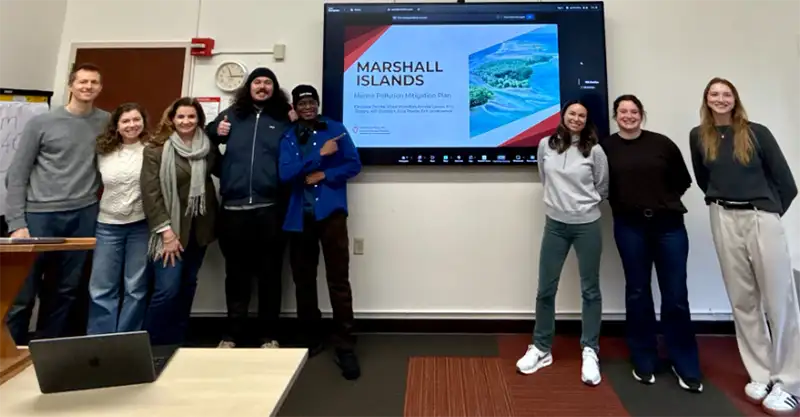
- Marshall Islands Climate Adaptation Plan: Marine Pollution Mitigation
- Chimney Swift Collaborative Planning in the Upper Mississippi/Great Lakes Region
Current EC master’s student Will Shedden worked on the Marshall Islands project. “Working on our conservation planning project was an incredibly valuable piece of the puzzle for me,” he says. “Never did I think I’d have the chance to plan a project in the Marshall Islands, and work with stakeholders half a globe away. This class provided not only professional experience in a real-world setting, but also the critical opportunity to delve into the conservation standards used globally by organizations in my field.”
You can be a part of this hands-on, real-world learning experience! Learn more about our environmental professional programs and apply today.