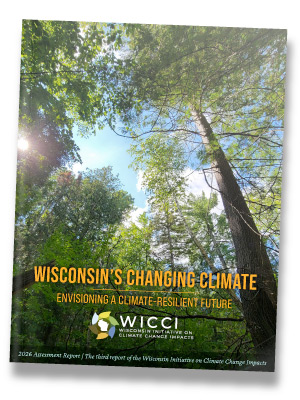
 The Wisconsin Initiative on Climate Change Impacts (WICCI), a nationally recognized collaboration of scientists and stakeholders working together to help Wisconsin policymakers and citizens understand the impacts of climate change, has released an assessment report that outlines the latest climate impacts and solutions.
Led by the UW–Madison Nelson Institute for Environmental Studies and the Wisconsin Department of Natural Resources (DNR), WICCI generates and shares information that can foster solutions to climate change impacts in Wisconsin. This latest report builds on WICCI’s 2021 Assessment Report, highlighting how the climate has continued to change over the past five years and how new data and insight is leading to adaptation, mitigation, and solutions. The report is the product of 14 working groups that include over 200 scientists, practitioners, and Wisconsin residents representing more than 50 national, state, and local agencies, Tribal Nations, non-profit organizations, universities, and private sector partners.
“The WICCI model, which yields decision-ready science for wide-ranging publics, reflects the Wisconsin Idea, the far- reaching impact of UW Extension and the long-standing mission of the Nelson Institute,” said Paul Robbins, Dean, Nelson Institute for Environmental Studies. “This report is a product of a powerful collaboration.”
“The 2026 WICCI Assessment Report provides updated climate science and practical solutions to help Wisconsin residents, communities, businesses, and industries understand and be ready for the impacts of Wisconsin’s changing climate,” said Karen Hyun, Secretary of the Wisconsin Department of Natural Resources. “We are grateful for the ongoing leadership of WICCI working groups through their contributions to this report and their work to achieve a climate-resilient Wisconsin.”
Details on the unusually pronounced extreme weather events in recent years are documented in the report. These events, along with more rapid shifts between very wet and very dry weather conditions, are costing Wisconsin as the climate continues to become warmer and wetter. Research shows that the 2010s decade was the state’s most extreme since records began in the 1890s, and the 2020s have been Wisconsin’s warmest decade so far. Projections indicate these trends will persist with greater variability between wet and dry periods, triple the number of extremely hot days and warm nights, and more intense storms.
The need for long-term, holistic solutions tailored to local needs is showcased throughout the report such as investing in nature-based approaches to provide durable, cost-effective and low-maintenance solutions and deliver multiple benefits; watershed-scale restoration and planning to reduce flood risk and improve water quality and aquatic habitats; actions to reduce the risk of harmful algal blooms and identify impacts from shifting lake ice duration and timing to improve public health and safety; infrastructure adaptations to address increasing streamflow, reduce long-term costs, and protect aquatic habitat; and investing in clean energy and low-carbon infrastructure to address human health impacts from climate change. These include threats to public safety and waterborne diseases caused by flooding, heat-related illnesses, and respiratory issues from wildfire smoke.
Climate change is accelerating shifts in Wisconsin’s natural systems. The report details strategies to manage and protect these systems, including assisted migration, stabilizing inland fisheries, restoring and preserving habitat, and addressing challenges to Great Lakes ecosystems and infrastructure. Hunters, anglers, conservation managers, and outdoor enthusiasts have an opportunity to adjust to changing conditions and adopt practices that will sustain our recreation, hunting, and fishing traditions in the future.
“Most importantly, this report provides hope and guidance,” said Steve Vavrus, a WICCI codirector, UW–Madison senior scientist in the Division of Extension and the Nelson Institute, and the Wisconsin State Climatologist. “WICCI plays a unique role by focusing directly on the solutions that keep Wisconsin’s economy strong and our communities safe. That is critical as we see extreme weather becoming more common and expensive.”
The report also highlights some of the climate-related challenges faced by Wisconsin’s businesses and industries. Warming trends are impacting Wisconsin’s $25.8 billion recreation industry in every region of the state. Crop production faces complex challenges and financial risk from new pests and diseases. Warmer winters are shrinking the harvest season in Wisconsin forests, straining the forest products industry needed to keep forests resilient. By adopting climate-focused management, Wisconsin businesses can help minimize the impacts of future warming and strengthen our economy.
“Although climate change is causing widespread adverse impacts across Wisconsin, opportunities and proven strategies can both improve Wisconsin’s economy and benefit human health and natural resources,” Vavrus said. “This report illustrates how each of us can contribute to solutions.”
Visit wicci.wisc.edu and view the report.