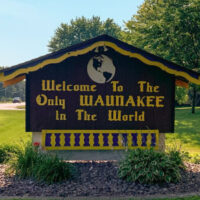
The Ho-Chunk Nation and the Village of Waunakee partner through UniverCity Year to address diversity and inclusion
This page is archived and kept only for reference. The information may be outdated or inaccurate, and the content may not meet current accessibility standards. If you need assistance, please email us at communications@nelson.wisc.edu. Located …
Student discovers passion for One Health approach in Environmental Conservation program
This page is archived and kept only for reference. The information may be outdated or inaccurate, and the content may not meet current accessibility standards. If you need assistance, please email us at communications@nelson.wisc.edu. When …
CCR and Geoscience students awarded post-doctoral positions
This page is archived and kept only for reference. The information may be outdated or inaccurate, and the content may not meet current accessibility standards. If you need assistance, please email us at communications@nelson.wisc.edu. The …
Environmental Conservation student helps create framework to guide environmental justice work
This page is archived and kept only for reference. The information may be outdated or inaccurate, and the content may not meet current accessibility standards. If you need assistance, please email us at communications@nelson.wisc.edu. Lifelong …
Wisconsin Humanities grant awarded to CHE
This page is archived and kept only for reference. The information may be outdated or inaccurate, and the content may not meet current accessibility standards. If you need assistance, please email us at communications@nelson.wisc.edu. Exciting …
CHE sponsors six multi-disciplinary working groups
This page is archived and kept only for reference. The information may be outdated or inaccurate, and the content may not meet current accessibility standards. If you need assistance, please email us at communications@nelson.wisc.edu. CHE …
Nelson alumna helps to clean the bay
This page is archived and kept only for reference. The information may be outdated or inaccurate, and the content may not meet current accessibility standards. If you need assistance, please email us at communications@nelson.wisc.edu. The …
UW-Madison partners with Beloit community to increase diversity within STEM
This page is archived and kept only for reference. The information may be outdated or inaccurate, and the content may not meet current accessibility standards. If you need assistance, please email us at communications@nelson.wisc.edu. Increasing …
EOI alumna now working for NASA’s DEVELOP program
This page is archived and kept only for reference. The information may be outdated or inaccurate, and the content may not meet current accessibility standards. If you need assistance, please email us at communications@nelson.wisc.edu. From …
Nelson alumna is helping to address the human-wildlife conflict
This page is archived and kept only for reference. The information may be outdated or inaccurate, and the content may not meet current accessibility standards. If you need assistance, please email us at communications@nelson.wisc.edu. Each …
Nelson Institute Dean featured in Scientific American
This page is archived and kept only for reference. The information may be outdated or inaccurate, and the content may not meet current accessibility standards. If you need assistance, please email us at communications@nelson.wisc.edu. Nelson …
A Wisconsin Idea win-win
A UW–Madison program called the UniverCity Year is partnering with communities across Wisconsin to find solutions to knotty problems and bolster the quality of life for the state’s citizens.
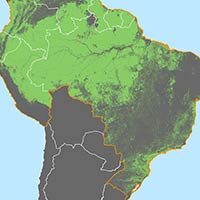
A view from space can save the trees
According to research led by Fanny Moffette, a postdoctoral researcher in the Department of Agricultural and Applied Economics and the Nelson Institute for Environmental Studies, deforestation dropped by 18 percent in two years in African countries where organizations subscribed to receive forest cover warnings from the Global Land Analysis and Discovery system.
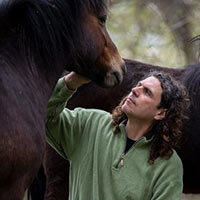
Researchers look for ways to store tens of thousands of genetic samples and use cloning to preserve and revitalize endangered — and possibly extinct — species
The Earth is in the midst of a sixth mass extinction event, and most scientists point to human activity as the primary cause. Each day, the planet loses an average of five to 30 species. While efforts are under way to preserve their habitat, these efforts may not be enough to save them. Extinct species, by definition, no longer exist. But their genetic material can live on in biobanks, offering the possibility of resurrection. Think of it as an extinction loophole.
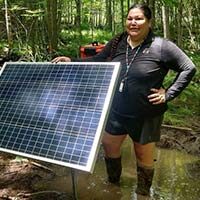
With pandemic adaptations, Angela Waupochick has launched a bioacoustics study of black ash conservation in northern Wisconsin
A PhD student in forest and wildlife ecology, Waupochick is among a growing number of scientists using a simple technique called bioacoustic monitoring to record forest soundscapes.