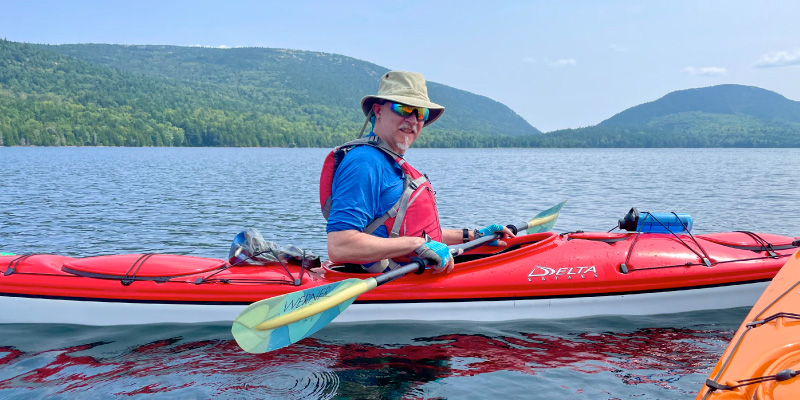
When most people retire, they get a lovely card signed by their colleagues. When Rob Beattie ’81 retired from the Nelson Institute for Environmental Studies, he got a certificate of recognition for service to Wisconsin — signed by the governor. For 20 years, Beattie has been a stalwart of the Nelson Institute, changing students’ lives by designing innovative curricula and building lasting relationships.
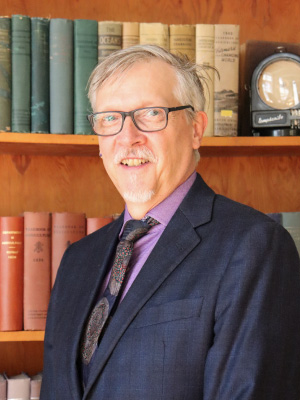
It’s fitting that Beattie closes his career in academia at the University of Wisconsin–Madison; four decades earlier, it’s where his educational journey began. Originally from the East Coast, Beattie came to Madison pursuing a degree in communication arts from the College of Letters & Sciences. Following an interest in freshwater ecosystems that grew from spending time at his grandmother’s home on Lake George in upstate New York, he paired his degree with a certificate in environmental studies from the Nelson Institute.
Through his certificate coursework, he learned a new way to approach scientific exploration — thanks to Professor Emeritus Cal DeWitt’s Field Explorations in Wetland Ecology class. “For the first three weeks, all he did was point to something and explain how it worked … or point to something and say, ‘We don’t understand anything about how this works,’ ” Beattie remembers. “He created this experience of science that I’d never had before, which was being confronted with mysteries and being told you had some of the tools necessary to solve them.”
Beattie had found his calling with environmental studies, and after graduating from UW–Madison, he pursued a master’s in environmental science from the State University of New York. From there, he transitioned to the private sector, working as a community relations consultant in Boston. His first job was consulting for a new wastewater treatment facility that involved 42 towns and cities in the greater Boston metropolitan region. “Everybody was pissed off at everybody else. My job was to go to an almost endless series of public meetings and meetings with engineers to try to understand the process of designing and siting a facility like this,” he remembers. “As a fresh master’s graduate, I was exposed to the ways that the science was way less important than some of the social aspects and the politics of how communities felt they were being treating.”
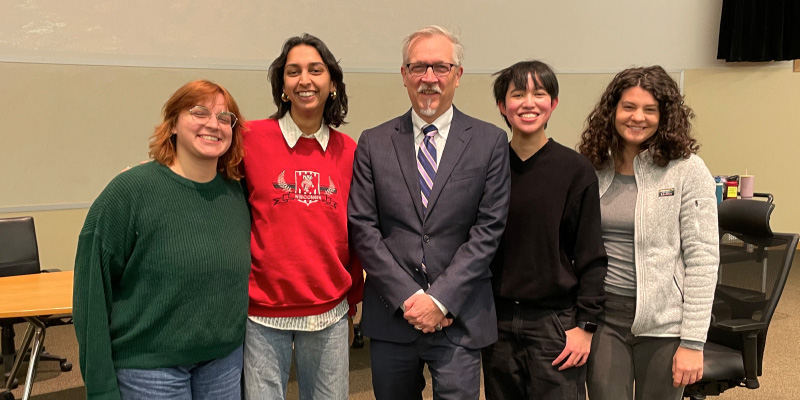
“I [learned how] the science was way less important than some of the social aspects and the politics of how communities felt.”
— Rob Beattie ’81
This experience resonated with some of the questions Beattie had received after pairing communication arts and environmental studies for his undergrad education. “People would ask me to explain the connection,” he says, so he learned to articulate a deeper story: “That story had to do with understanding that environmental issues, at their base, are really human issues: how we adapt and interact with the natural systems around us, but also with the social systems that affect those natural systems. And in order to do anything about those connections, you need to be able to explain what you’re doing and why.”

This story became Beattie’s career credo. Following this thread, Beattie returned to academia — this time to Massachusetts Institute of Technology (MIT) — to further explore how power, social differences and conflict affect environmental solutions. While at MIT, he got a taste for teaching, leading several environmental policy and planning classes and developing his first course. In 1998, he completed his PhD in urban and regional planning, with an emphasis in environmental policy. Before making his way back to Madison, Beattie spent six years at the University of Massachusetts Boston where he led the undergraduate environmental studies program.
When he returned to the Nelson Institute in 2006, his first charge was to develop an interdisciplinary PhD program — CHANGE, or the Certificate on Humans in the Global Environment — which ran from 2007 to 2014 through a limited-term National Science Foundation grant. Beattie continued to design innovative graduate-level coursework, namely in the institute’s environmental conservation professional masters program. In 2010, Beattie led the creation of the institute’s Community Environmental Scholars Program (CESP), which supports Wisconsin students who have been historically underrepresented in environmental studies. He served as director and academic advisor for that program through his retirement, supporting hundreds of students, nearly 200 of whom were first-generation or non-traditional students.
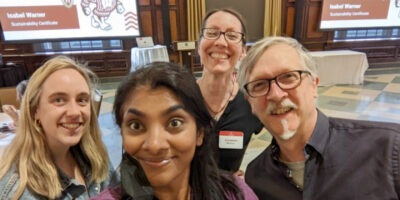
And for Beattie, that’s what it’s all about — not the governors’ certificates or journal articles. If setting out to find the human connections behind environmental issues was the goal, Beattie has certainly achieved it. “But I didn’t even get a chance to talk about how great it was to work with Vaish as a TA, or to work with Lauren as a student!” Beattie protests as his interview ends.