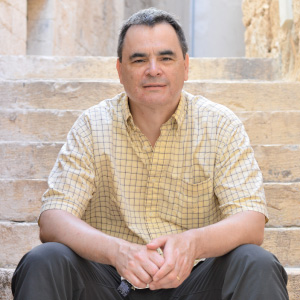
As a boy, Ken Conca fished for quahogs — large, hardshell clams — along the coast of Narragansett Bay. It was father-son bonding time, plus a way to save money for their working class family.
One day, there was a sign planted in the sand: No swimming. No shellfishing. An old sewage treatment plant to the north had overflowed, contaminating the water. Just three days later, the sign was gone. “Who makes these decisions?” Conca wondered. It was his first encounter with the complex systems that surround environmental issues. Today, Conca is a leading expert in environmental peacebuilding — a field that sees environmental issues not just as a result of conflict, but an entryway to peace.
“I was 10 years old in 1970, which was the peak of violence of the Vietnam War,” he recalls. “I remember assuming that I’d either go to college or I’d be drafted.” His mother, an Irish day laborer, and his father, an Italian mechanic, were adamant that their children have access to the education that they hadn’t. Many of Conca’s high school classmates did join the military, but Conca was admitted to Brown University, just 10 miles away from home. He entered the Department of Geology — “a relatively young science in those days” — but found himself interested in the human dimensions of geological issues. After earning his bachelor’s, Conca applied and was accepted to the land resources program at the University of Wisconsin–Madison’s Nelson Institute for Environmental Studies.
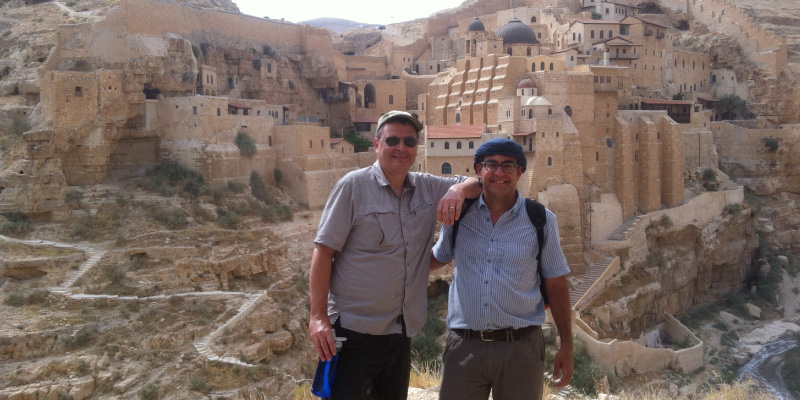
“The environment wasn’t just a potential trigger for conflict … it was something that brought people together.”
— Ken Conca MS’85
Conca arrived in Madison with only his backpack and a sleeping bag. Wandering past Science Hall, he met academic program advisor Barbara Borns, who supported him in everything from academics to finding a place to stay. She connected him with the then-new certificate in energy analysis and policy (EAP). The program was developed by John Steinhart, a founding faculty member of the Nelson Institute itself. “He was one of the most important people for me, ever,” says Cona. “We felt that we were making it up as we went along. There were no models, there were no textbooks,” he remembers. “It really was my launching pad in a lot of ways.”
After earning his master’s degree in 1985, Conca spent a few years working on Capitol Hill in Washington, DC. He quickly grew frustrated with the pace and processes of government. “I knew I wanted to get back into the world of ideas,” he says, so he headed west to the University of California–Berkeley for a PhD in energy and resources.
In his final year, Operation Desert Storm in the First Gulf War occupied the headlines. He’d also run out of funding, and he needed a job. “I went over to the peace studies program, and I pitched the idea of teaching a class on environment, peace, and conflict issues.” He had no teaching experience, and little research existed to build curricula around. “There were no textbooks. There were no established practices,” he remembers, just like his time in the EAP program. So he did what John Steinhart did and built the class alongside the students.
These experiences opened the door to first-of-its-kind research around peace and environmental issues. “The environment wasn’t just a potential trigger for conflict … it was something that brought people together, that forced people to cooperate, that helped people have a common identity around a place,” he says. “And in that sort of very exploratory thinking, the field of environmental peacebuilding was born.”
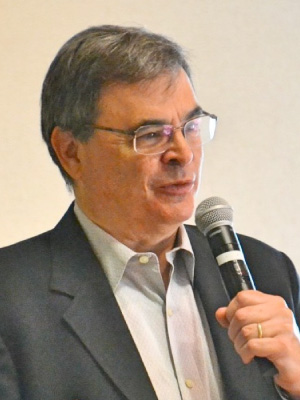
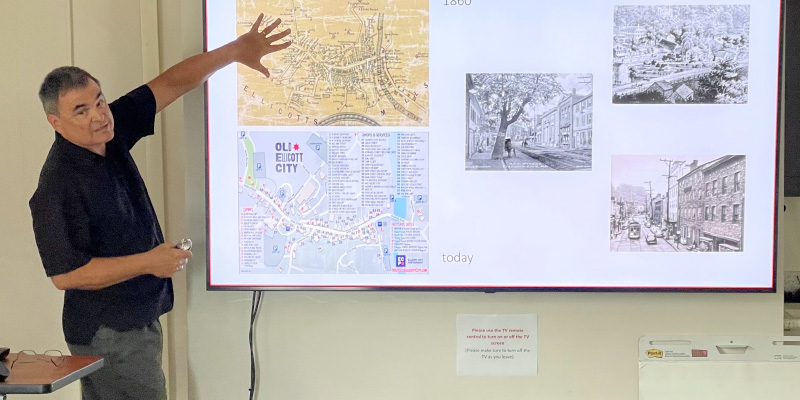
Ten years after earning his PhD, Conca published Environmental Peacemaking, the first book to put the field on a global stage. Since then, he has taught around the globe and guided national and international organizations. For his impact, Conca was awarded the 2017 Al-Moumin Award by the United Nations Environment Programme and the 2020 University of Louisville Grawemeyer Award for Ideas Improving World Order. In 2025, he was appointed emeritus status in the School of International Service at American University in Washington, DC.
“When we started doing this work in the late nineties, we could have fit everybody that wanted to be a part of the conversation in a mid-sized conference room,” Conca reflects. Today, environmental peacebuilding is a phrase used by intergovernmental organizations globally — and it’s perhaps more timely than ever.
“Look at the damage to the environment that we’ve seen in Ukraine, in Gaza, in Sudan. The idea that war is unhealthy for the environment, that war is unhealthy for people … this is just one more reason why peace is more important than ever,” Conca says. “To me, peace was never just the absence of violence. Peace is a positive set of circumstances we are trying to construct in society.”