Air pollution exposure causes a wide range of cardiovascular, neurological, and respiratory health harms. These health conditions can be severe and trigger hospitalizations and emergency department (ED) visits that can be enormously costly due to medical bills and lost wages. The inverse is also true: improving air quality can prevent expensive hospital admissions and ED visits and provide cost savings for individuals, employers, health care providers, and governments.
The economic costs of air pollution feature prominently in analyses of the potential costs and benefits of air quality regulation and policy. Human health is important to consider in this context since the costs of air pollution controls are primarily incurred by polluting industry, but the benefits of cleaner air are enjoyed by us all. In fact, health gains regularly represent the single largest category of benefit or cost of U.S. Clean Air Act regulations, which from 1990 to 2020 achieved economic benefits that were 30 times greater than their costs.
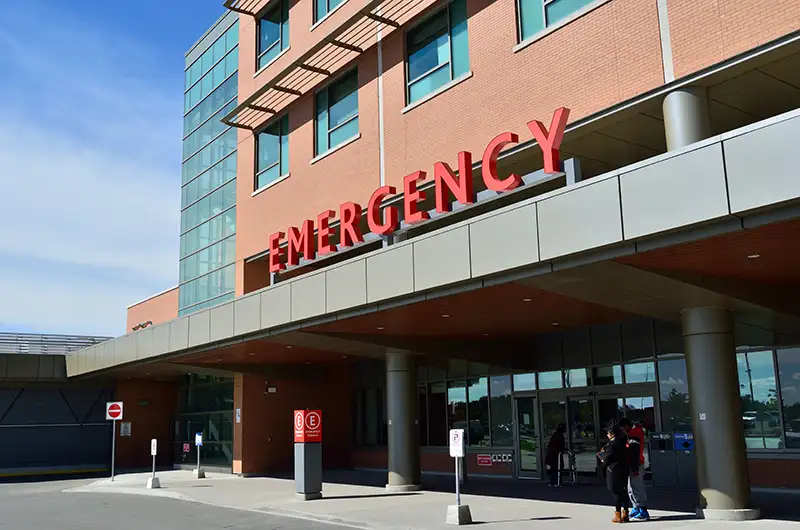
The centrality of health to decision-making and policy around air pollution means that economic analyses should be as accurate as possible. The U.S. Environmental Protection Agency (EPA) has long used tools to calculate the health and economic effects of changes in air pollution exposure levels, which are used regularly in agency rulemaking and by the wider air quality and health research community. However, these tools assume that the costs of medical care are the same across the United States. But we know that medical costs can vary widely depending on who you are and where you live.
Our research, published recently in Environmental Research: Health, provides more refined estimates of medical costs related to air pollution by exploring costs by race/ethnicity, region of the country, and insurance type. Since patients can incur additional costs after they have been discharged from the hospital or ED, we also include the costs of outpatient surgeries, home health care needs, and prescribed medicines in our analysis.
We apply our cost estimates to an air quality improvement scenario modeling the health benefits from a 2024 EPA action under the National Ambient Air Quality Standards (NAAQS) that tightened nationwide limits on particulate matter exposure. Using our more comprehensive picture of medical costs, the economic value of health benefits from avoided hospital admissions and ED visits under the revised NAAQS are 64 percent higher than when using EPA’s standard methods. This indicates that EPA’s approach is underestimating the societal benefits of improving air quality.
At a time when health care premiums and spending continue to rise and climate-linked extreme events impose increasing health-related costs on the American public, including from wildfire smoke exposure, it is important that the methods used to estimate the human costs of air pollution – and the benefits of air quality improvements – are as comprehensive as possible.
Author Affiliations
- Nicholas Mailloux, postdoctoral research associate, Nelson Institute for Environmental Studies UW–Madison, namailloux@wisc.edu
- Vijay Limaye, adjunct assistant professor, Population Health Sciences, School of Medicine and Public Health and Nelson Institute for Environmental Studies, UW–Madison, vlimaye@wisc.edu
Related Articles
- Real-World Children’s Health Experiences in Milwaukee Can Help Evaluate Impacts of Actions to Improve Air Quality
- Reducing Vehicle Idling to Improve Air Quality and Health in Milwaukee
- Love My Air Wisconsin: UW Doctoral Researchers and DHS Data Analysis Experts on Localized Outdoor Air Quality Trends at Milwaukee Public Schools