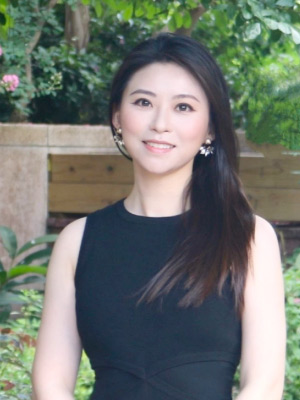
 You could say that the University of Wisconsin–Madison was influential in Yun Hang’s life. Just how influential? In the summer of 2026, months before the birth of her first child — a daughter — she had already picked a name. Madison.
Hang came to campus in 2013 as a graduate student. (“The winter in Wisconsin, honestly, brutal,” she jokes.) In the College of Letters & Science, she began her master’s studies in the Department of Atmospheric and Oceanic Sciences (AOS), working with Professor Zhengyu Liu as her advisor during her first year and with Professor Tristan L’Ecuyer during her second and third years. She was curious about the effects of different cloud and aerosol types on Earth’s energy budget, a line of work she continued after completing her master’s coursework in 2016 and transitioning to the PhD program in the same department.
Though her work was highly technical in the atmospheric sciences, Tracey Holloway — a Nelson Institute professor and AOS affiliate — suggested Hang explore the energy element in a new way with the institute’s energy analysis and policy graduate certificate. Hang also later applied to the Nelson Institute’s environment and resources (E&R) PhD program. In 2020, she earned a PhD with both AOS and E&R training, completing a dissertation that significantly expanded her initial research interests: “New light on Earth’s energy budget and its implications for solar energy potential.”
“I want to do some real-world applications using my research and technology … That’s the reason why I chose Nelson.”
— Yun Hang MS’16, PhD’20
Hang completed her thesis defense in early April 2020, less than a month after the world shut down due to the COVID-19 pandemic. “My father was fighting COVID on the front lines,” she remembers. “I started thinking, maybe I can do more interdisciplinary work … about public health using remote sensing.” With a quick online search, she found Professor Yang Liu at Emory University’s Rollins School of Public Health (RSPH), who was applying satellite remote sensing technologies to public health impacts. She reached out and, after two rounds of interviews, was offered a position as the first climate and health postdoctoral research fellow at RSPH and accepted. “Just that accidental search, and I changed my career path,” Hang says.
For three years, Hang was a postdoctoral research fellow at Emory, where she published many articles, won her first NASA research grant as a sole principal investigator (PI), presented her research at universities across the country, and was even invited by the NASA administrator to attend the NASA-SpaceX Crew-6 Launch.
In 2023, she accepted a tenure-track position at the University of Texas Health Science Center at Houston. A jointly appointed assistant professor in the Department of Environmental and Occupational Health Sciences and the Department of Biostatistics and Data Science, her work continues to extend her initial interests in applied physics and remote sensing into public health research. Recently, she developed an international wildfire exposure indicator that uses satellite remote sensing data. This work was included in the 2025 Lancet Countdown on Health and Climate Change, which she also coauthored. Further expanding the public health applications of remote sensing, Hang is one of 11 PIs selected nationwide for NASA’s inaugural Water Quality Applications team. She is exploring how satellite observations can be used to better understand and monitor water quality. “That excites me so much,” she says. “I just hope the work can be useful to people. If it can help someone make a better decision, or help a community in some small way, that would mean a lot to me.”
For Hang, maintaining a sense of place — and service to it — has been paramount through her education and career. She finds motivation by combining her lived experience with her research. “I remember my first project that got selected by NASA was about the heat, air pollution, and green space in Atlanta, because at that time, I lived there,” she says. Since moving to Texas, she’s developed projects addressing environmental challenges in two major urban areas along the U.S.-Mexico border. “I like this because it’s related to my life, everyone’s life lived here, and that will have a direct impact. That’s the reason why I chose Nelson. I want to do some real-world applications using my research and technology,” she says. “After these years, I feel all of these pieces are put together.”