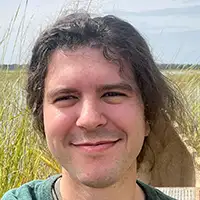
In this presentation, Dr. Elan Pochedley shares how his research and teaching revolve around Neshnabé stories, environmental knowledges, ethics, and relationships to place and other-than-human relatives. Through research, courses, and publications, his work attends to how Potawatomi and Ojibwe people and nations have understood their obligations to specific plants, animals, and waterways across generations, often despite imposed environmental transformations and dispossession.
This talk addresses Potawatomi and Ojibwe nations’ efforts to rehabilitate nmé (lake sturgeon), restore and protect mnomen/manoomin (wild rice), care for injured kno/migizi (eagles), and renew geographic connections and knowledges. These initiatives of care are informed by Neshnabé worldviews, stories, histories, and teachings. He will also briefly address archival research he is currently conducting concerning the central and western regions of the Great Lakes, addressing Native peoples’ historic environmental relationships and interventions, as well as investigating how they have navigated ecological dislocations, geographic removals, stewardship suppression, and habitat transformation.
This research, associated with the NCAIS Faculty Fellowship at the Newberry Library, focuses on the homewaters and homelands of the Bodéwadmi (Potawatomi), Dakota, Ho-Chunk, Kiash Matchitiwuk (Menominee), Meskwaki (Fox), Myaamia (Miami), Odawa, Ojibwe (Chippewa), Sauk (Sac), Wyandotte (Huron), and other Indigenous peoples.
Can’t attend in person? Join this seminar on Zoom
About Elan Pochedley
Elan Pochedley is the 1855 Professor of Great Lakes Anishinaabe Knowledge, Spiritualities, and Cultural Practices in the Department of Religious Studies at Michigan State University, where he is affiliate faculty of the American Indian and Indigenous Studies (AIIS) program. He is the 2025-2026 NCAIS Faculty Fellow at the Newberry Library in Chicago.
Pochedley is the author of Restoring Indigenous Place Names: Making Anishinaabe Toponyms Visible Throughout the White Earth Ojibwe Reservation (Cambridge University Press) and is finishing a second book tentatively titled Neshnabé Geographies. These works focus on Bodéwadmi and Ojibwe place-based knowledges, ecological relationships, environmental histories, and ethics. Pochedley is currently conducting archival research concerning Native peoples’ historic environmental relationships, interventions, and practices throughout the central and western regions of the Great Lakes.
His research has been supported by the National Science Foundation, the Charles Eastman Fellowship at Dartmouth College, and the 1855 Professorship at MSU. He received his Ph.D. from the University of Minnesota – Twin Cities in sociocultural anthropology. Pochedley is Neshnabé/Bodéwadmi and an enrolled citizen of the Citizen Potawatomi Nation.