Moving away from plastics requires material alternatives, and the flax plant offers one that can be grown right here on Wisconsin farms.
Humans have cultivated flax for thousands of years for high-quality linen, papermaking, and its nutritious seed. New technologies now use flax fibers to produce bioplastic composites for consumer products currently made from plastic. Today’s global textile industry relies heavily on petroleum-based plastics like polyester and nylon, contributing significantly to microplastic pollution where 30 percent of microplastics in waterways are shed directly from clothing fibers.
With funding from the Forward Agriculture, Use Inspired Research and Development grant program, this work is building a detailed assessment of the infrastructure, processing, and logistical investments needed to connect Wisconsin farmers with existing manufacturers and realize the significant economic potential of flax across the entire supply chain.
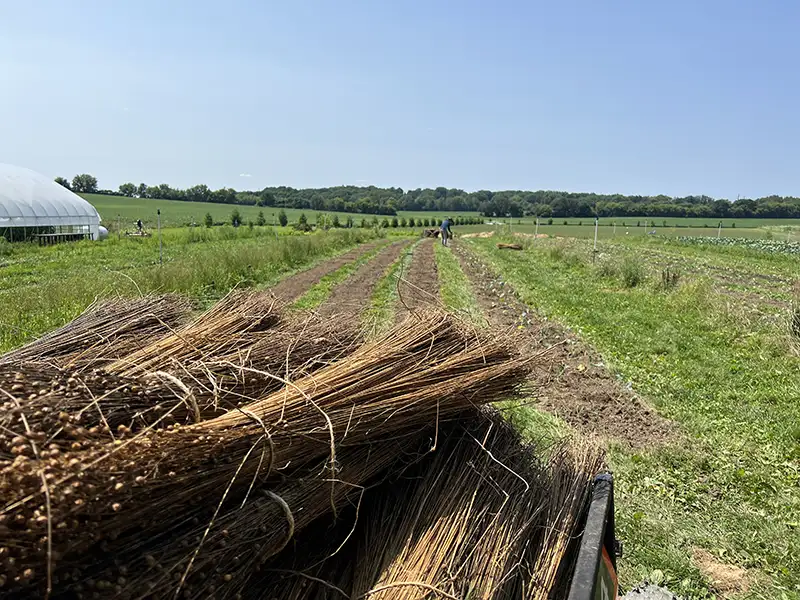
Building on the momentum of the Fibershed movement, the project also explores the feasibility of expanding Wisconsin’s small but growing artisanal textile sector to incorporate regionally grown and sewn linen.
Flax grows well in the upper Midwest and requires minimal inputs, offering Wisconsin farmers a pollinator friendly crop that differs from the state’s major commodity crops that can support more diverse crop rotations, disrupt pest and weed cycles, and reduce financial risk through forward contracting.
As concern over plastics increases and consumers seek alternatives to synthetic materials, existing manufacturers can integrate Wisconsin-grown flax fiber into a wide variety of products such as paper, erosion control mats, gauze bandaging, carpet backing, and in bioplastic composites for car parts, boats, sporting goods, and more. Long line flax fibers can be spun into natural, durable linen garments.
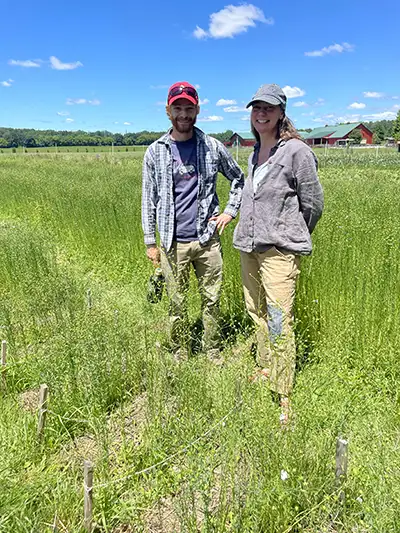
Additional coproducts are derived from shive, the plant’s woody core, which can be used for soil amendments, mulch, animal bedding, packaging, and acoustic tiles. Flax seed is also valued for human and animal consumption and pressed for oil to make wood finishes, personal care products, and naturally derived linoleum.
With more than 70 percent of the world’s fiber flax currently grown in northern Europe, strategic investment in raw fiber processing equipment would allow Wisconsin to take a leadership role in producing durable biodegradable materials that reduce plastic pollution in the environment and strengthening a circular bioeconomy benefitting farms and rural communities.
Author Affiliations
- John Hendrickson, UW–Madison Center for Integrated Agricultural Systems outreach program coordinator and farm viability specialist, jhendric@wisc.edu
- Leslie Schroeder, Midwest Linen Revival cofounder, leslie@midwestlinenrevival.org