The smallest plastic particles in the Great Lakes, those under 10 micrometers, are entering human bodies, yet we lack the tools to detect them reliably. Nano- and low-micrometer microplastics (NLMMPs) are the least understood form of plastic pollution in the Great Lakes. They are far too small to see and very difficult to measure, yet they may pose the greatest risk. These particles have been detected in human blood and in newborn babies’ first diapers.
We urgently need to understand what that means for human and ecosystem health. These tiny particles can move through water, wildlife, and the human body, but current monitoring tools are not effective in detecting them. This is the core challenge our research aims to solve.
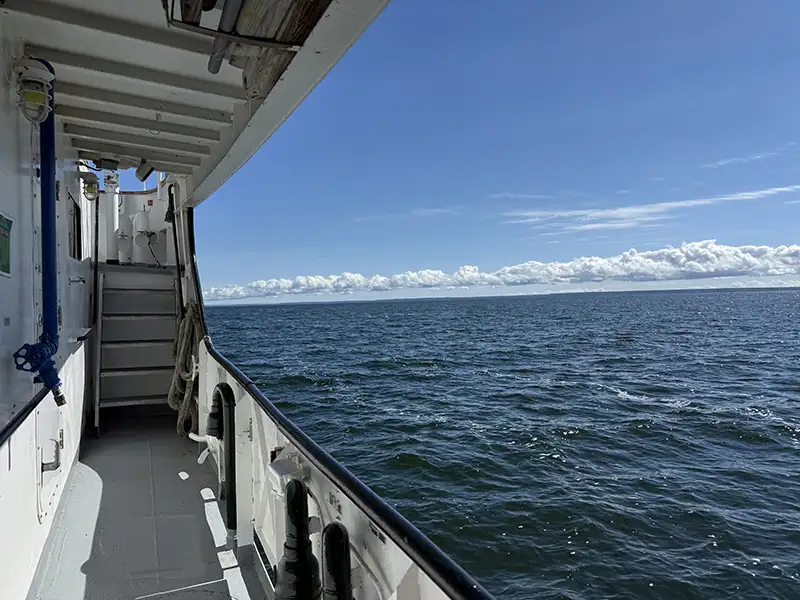
Plastic pollution has become a growing concern worldwide. In 2016 alone, an estimated 19 to 23 million metric tons of plastic waste entered rivers, lakes, and oceans — about 11 percent of all global plastic waste generated that year. While larger microplastics are now measured routinely, the smallest particles often slip through traditional monitoring. Recent studies show that microplastics are widespread in the Great Lakes, yet almost nothing is known about the smallest fraction: where they travel, how they degrade, and how they accumulate in the food web.
With support from the National Oceanic and Atmospheric Administration (NOAA) Wisconsin Sea Grant and the NOAA Marine Debris Program, our team is developing a new approach to detect, quantify, and characterize these tiny particles in the Great Lakes. We have created a fractionated membrane filtration system that separates and recovers particles in the 1–10 micrometer range with more than 90 percent efficiency.
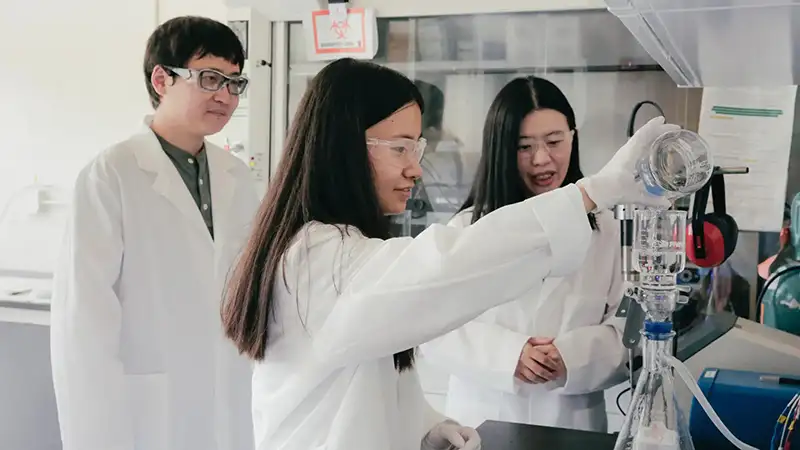
To improve detection further, we designed a new plasmonic membrane sensor, a filter coated with a thin layer of gold that enhances the optical signals of microplastics during analysis. These sensors function both as filters and as analytical platforms, allowing researchers to visualize and identify individual particles even in murky or algae-rich lake water. Compared to conventional membranes, they increase Raman signal intensity by nearly 50 percent, enabling rapid and accurate detection at the single-particle level.
We are now applying this platform to study how plastic debris breaks down in the Great Lakes under sunlight, waves, and microbial activity, generating the first systematic dataset on microplastics degradation in freshwater. In partnership with the U.S. Geological Survey and Wisconsin Sea Grant, we are also beginning to examine potential toxicity concerns for species in the Great Lakes food web. To support future large-scale monitoring, we are also developing an AI-based framework to automate particle detection and understand how environmental conditions influence microplastic release and transformation.
Author Affiliations
UW–Madison Department of Civil and Environmental Engineering:
- Mohan Qin, assistant professor, mohan.qin@wisc.edu
- Haoran Wei, assistant professor, haoran.wei3@wisc.edu