ENVIR ST 402 LEC 003
Wednesday, 3:30–5:25 p.m.
3 credits
Instructor

Elan Pochedley
Assistant Professor, Environmental Studies
Course Description
This course surveys how Indigenous nations and peoples conceptualize their belonging to place and their roles/responsibilities within respective ecosystems. We will address how citizens, knowledge keepers, treaty rights practitioners, and governments of certain Indigenous nations of the Great Lakes region experience(d) environmental changes and ecological transformations.
This course provides an introduction to how these peoples and governing bodies have navigated imposed legal systems and regulations, alterations to land/waterscapes, changes to their food systems and sustainable economies, and threats to their communities’ health emerging from industrial/infrastructural development and contamination.
This course presents the efforts of sovereign Native nations and their citizens as they assert their political and environmental authority throughout their traditional homewaters and homelands, as well as within their contemporary homes.
In challenging popular narratives of these nations and peoples’ complete dispossession, this course addresses how Indigenous-led ecological restoration initiatives, legal innovations and interventions, and water protection efforts attempt to restore and renew interspecies ecological networks and the presences of their other-than-human relatives.
We will explore how contemporary Indigenous peoples and their ancestors rely/relied on these relationships (and the environments that allow(ed) them to flourish) for survival and ontological belonging to place.
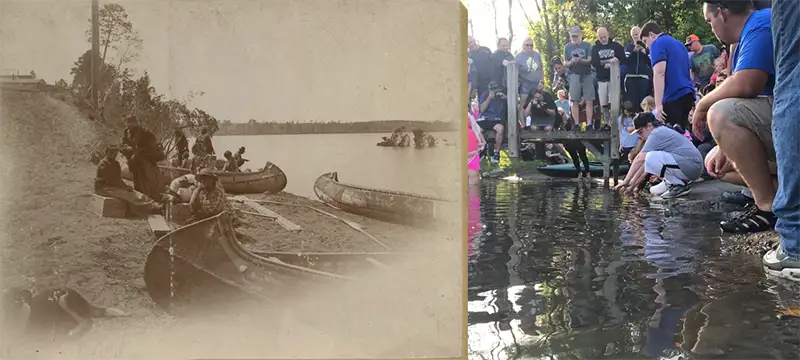
Photo citation: Edward A. Bromley, Ojibway Indian Landing at Walker, 1896, photograph, 8×10”, courtesy of the Minnesota Historical Society; and Elan Pochedley, Match-E-Be-Nash-She-Wish Band of Pottawatomi’s Annual Nmé (Sturgeon) Release, 2019.
Fulfills Environmental Studies

Theme
UW Designations

Intermediate

Social Science