


Dear alumni and friends,
“Some say the world will end in fire, Some say in ice. From what I’ve tasted of desire I hold with those who favor fire.”
It’s not often that I get to quote Robert Frost, but it feels appropriate as we close our editorial journey through the elements with fire. Though fire is indeed a normal and natural part of ecological function — and any adaptive system follows cycles of reorganization, growth, and release — the incidence of wildlife in the U.S. and Canada has become truly alarming and often devastating. Whether or not we’ve entered a “Pyrocene,” dealing with fire is core to environmental studies and sustainability.
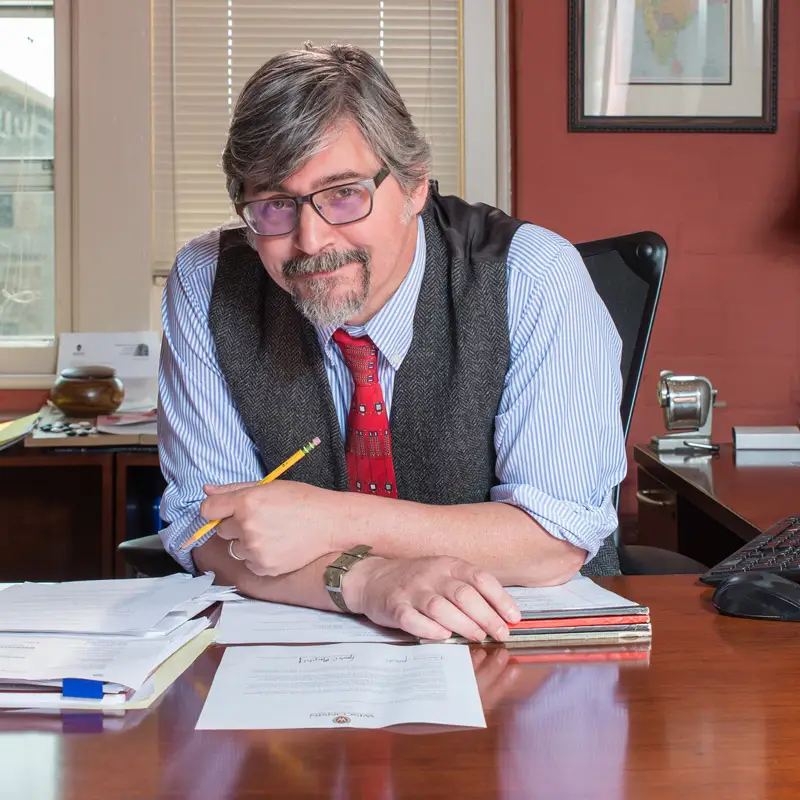
Just like fire itself, the ground this issue covers is indiscriminate. We talk about fire’s ability to destroy and to heal, to inspire and to despair. Take our cover story, for example, written by Dylan Couch — a graduate associate in our Center for Culture, History, and Environment. Through the scorched items found in Aldo Leopold’s pocket on the day he died — which are housed in our very own University Archives — he explores the precarity of protecting our collective history in an age dominated by fire.
We also share tips for how not to start a fire, as well as a look at how our students learn to do the opposite in our prescribed burn class. For a more metaphorical approach to fire, new faculty affiliate Katherine Cornwall discusses preventing burnout from her research at the intersection of mental health and climate change. And that’s just the beginning; browse the full issue for news on research, a fiery alumni profile, and more.
I hope you’ve enjoyed our water, earth, air, and fire issues over the past year. Whether your reaction has been hot or cold, our editorial team would love to hear your feedback. If you have a moment, consider responding to this 1-question survey to let us know how you’re liking this era of The Commons.
On, Wisconsin!
Paul Robbins
Dean, Nelson Institute