


It was the spring of 2011, and Ryan Klausch had just driven eight hours to interview for a security ranger summer internship with the Minnesota DNR. “I only got that because I drove all the way to Bemidji from Madison for the in-person interview,” Klausch says. “They were impressed by my willingness to do that — so much so that they offered me the internship before I even left so I didn’t need to worry about it on my drive home.”
If there’s one thing you need to know about Klausch, it’s that he’s willing to travel a long way to work in the outdoors. His résumé lists sand dune stewardship in upstate New York to invasive species management in Pennsylvania. He even spent his college days wading through Wisconsin marshes and trapping turtles for genetic research. “I spent a couple summers walking through muck and catching turtles — which isn’t something most people can say.”
Klausch was raised with an outdoors-first mentality. His family spent every free moment doing something outside — hiking, backpacking, canoeing, biking. If it was under the sun or stars, the Klausches were sure to be there. Even their family vacations were spent out west at some grandiose National Park. Naturally, when Klausch came to UW–Madison, he majored in wildlife ecology and environmental studies.
Nowadays, Klausch spends his free time backpacking in the California wilderness — often doing four-to-five day stretches at a time. He’s even gearing up for a 12-day trip in August. “I’m really excited for that,” he pauses, “but I’m also not excited to carry all that food.”
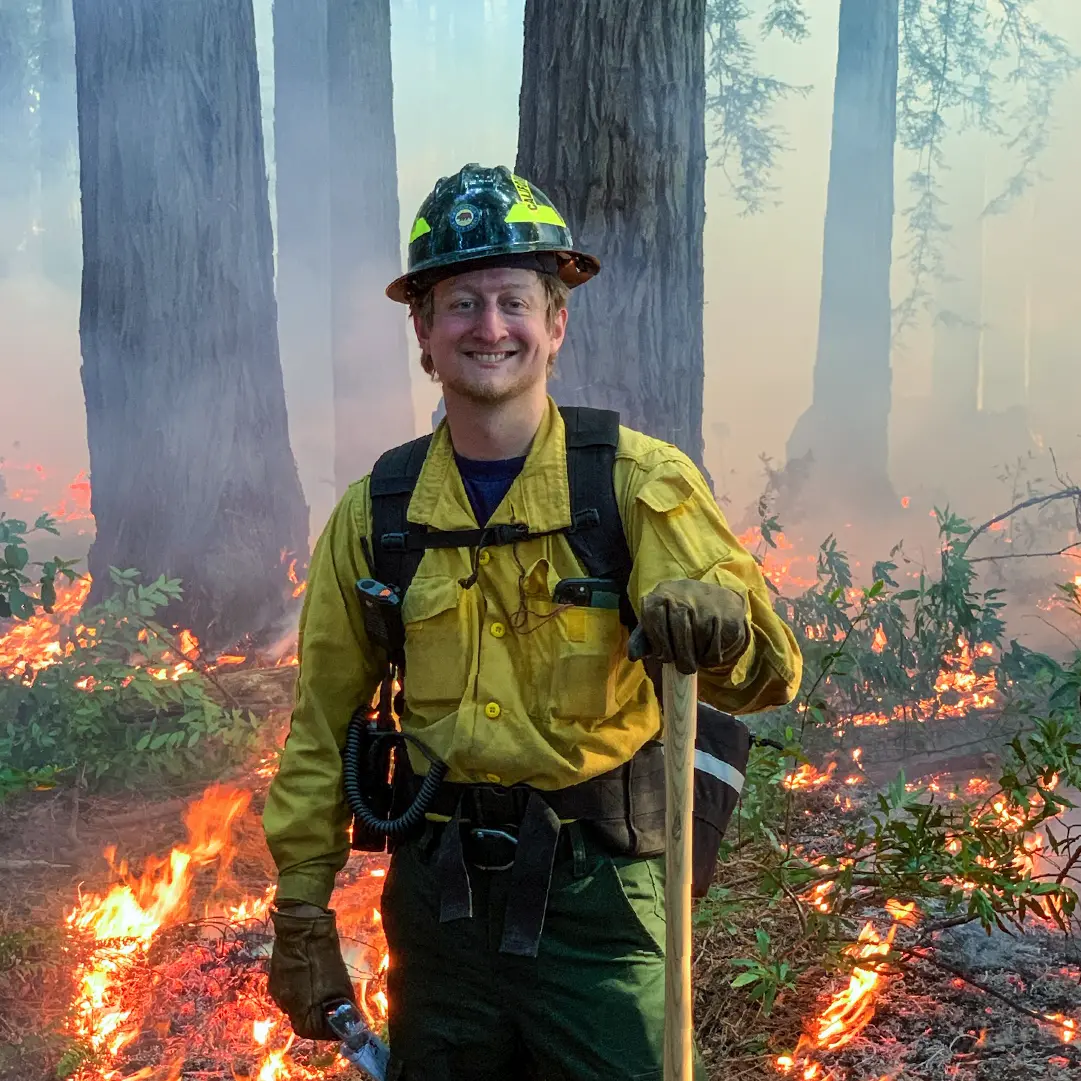
His love for the outdoors complements his current position at California State Parks where he manages their Wildfire and Forest Resilience Program. Klausch is also a California State-Certified Prescribed-Fire Burn Boss and leads his local prescribed burn association in Sonoma County.
So, how did Klausch go from wetlands to wildfires? We’re here to tell the tale.
Prometheus Goes 4-Wheeling
After graduating from UW–Madison in 2014, Klausch joined the Student Conservation Association, a nonprofit organization that sends entry-level conservation workers to different agencies across the country. One of these jobs brought him to the natural resources department within the Naval Air Station in Pensacola, Florida. There, he met prescribed burns.
Klausch describes his first experience as surreal. “They’d attach a torch to the back of an ATV, and when you press the throttle, it would shoot fire out of the back. So, you’d slowly drive with fire shooting out the back of your vehicle,” he explains.
From then on, Klausch found a familiarity within fire. “It’s a very human thing. Everyone’s stared at a campfire for no good reason, and I feel like that’s a very connecting feeling for a lot of people. That very same feeling happens on prescribed fires where it just kind of feels right and normal and human to be doing it, but there’s not a good way to explain it,” Klausch says.
Where There’s Smoke …
After a couple years of bouncing around different jobs across the country, Klausch found his way to California working for the Bureau of Land Management. “That position got my foot in the door and into the next level of career with full-time, permanent job benefits. Although it was fun hopping from state to state all around the country, I was ready to stay in one place for a little bit longer.”
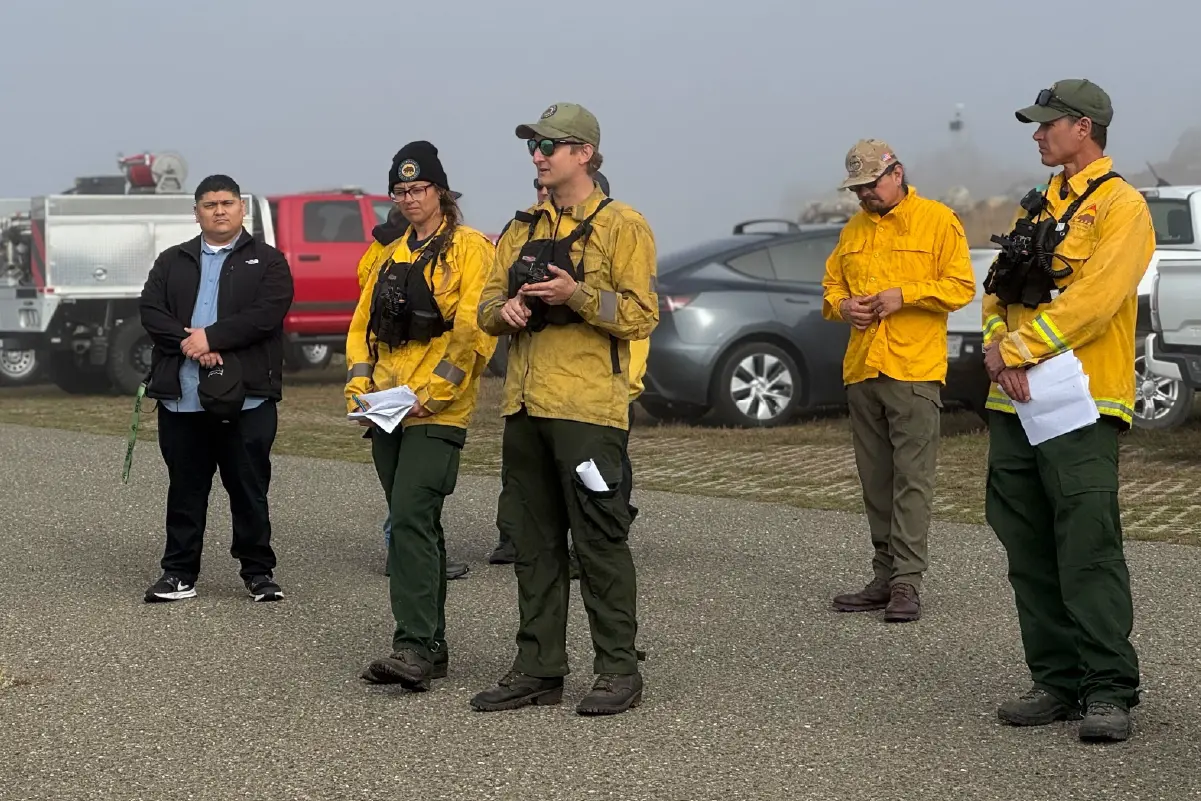
His next career move was to the Mojave Desert where he managed a million acres of grazing allotments for sheep and cattle in the desert. Part of his work also included being a resource advisor on wildfires and prescribed burns — working with firefighter personnel to prevent damage to natural and cultural resources. If there was damage, Klausch was the one to make it right. Prescribed burns would often unknowingly dig up underground tribal sites when creating a fire containment line. Klausch would work with local tribes to look at the damage and see what they could do to repair it.
“California is a very culturally rich place with a lot of different tribes. There’s so many small spots, you wouldn’t even know it until something gets kicked up. And even though it’s potentially damaging, it can also be helpful and create a fuller picture for both archeologists and the tribes,” Klausch says.
Burning Bright
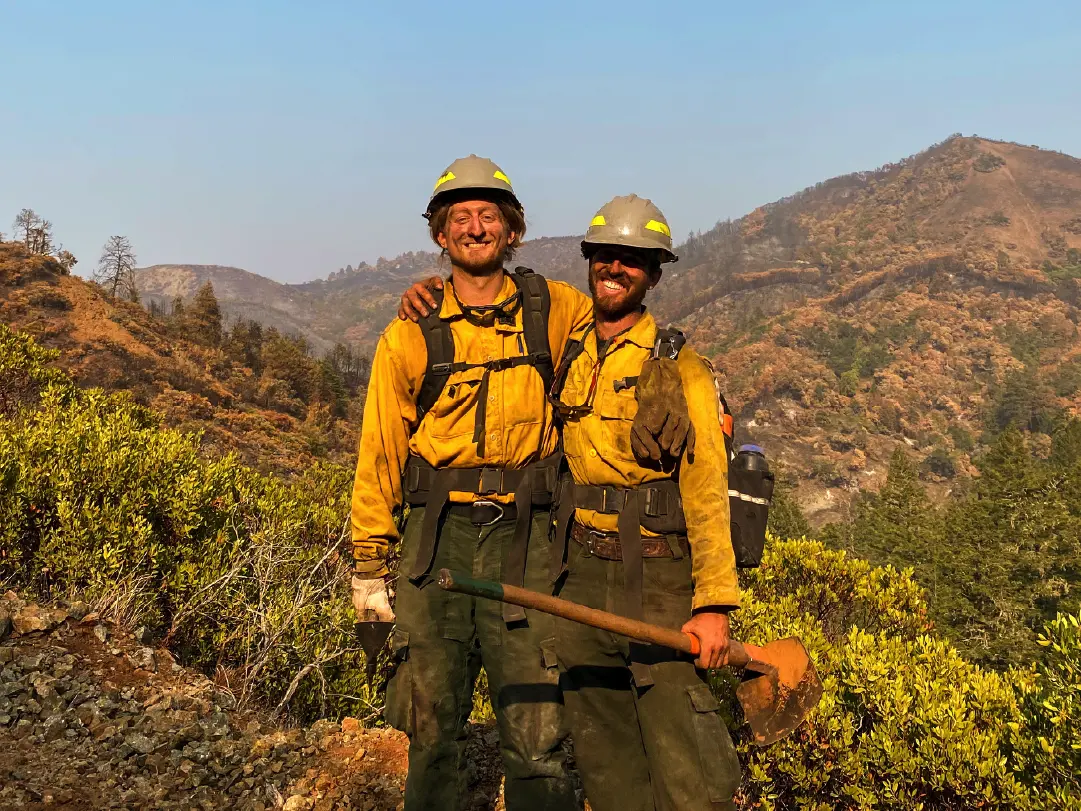
While working on a prescribed burn, fire not only lit the landscape but Klausch’s heart when he met his current partner of eight years. This led him to move up to Sonoma County, just north of San Francisco, where he worked as a forester for the Conservation Fund.
While there, he worked on coordinating wildland fuel projects for wildfire prevention and risk reduction strategies, which then led him to becoming tied into the local prescribed burn association in Sonoma County. He’s been burning with that group for the past six years. “The association has a lot of community members who have experienced wildfire and wanted to do something about it,” Klausch says. “And they saw prescribed fire as the best tool to do with that in California.”
The association united people from all different walks of life, and Klausch’s connections led him to his current job with the California State Parks, where he manages the Wildfire and Forest Resilience Program. There, he does everything from prescribed burns to forestry work and everything in between. During this time, he also became a State-Certified Prescribed-Fire Burn Boss.
“That was a big change for me — being recognized at that level of position and having that level of responsibility. But you can see that I got here from a lot of different jobs and experiences. They were all building on each other to get to where I am now.” Klausch says.
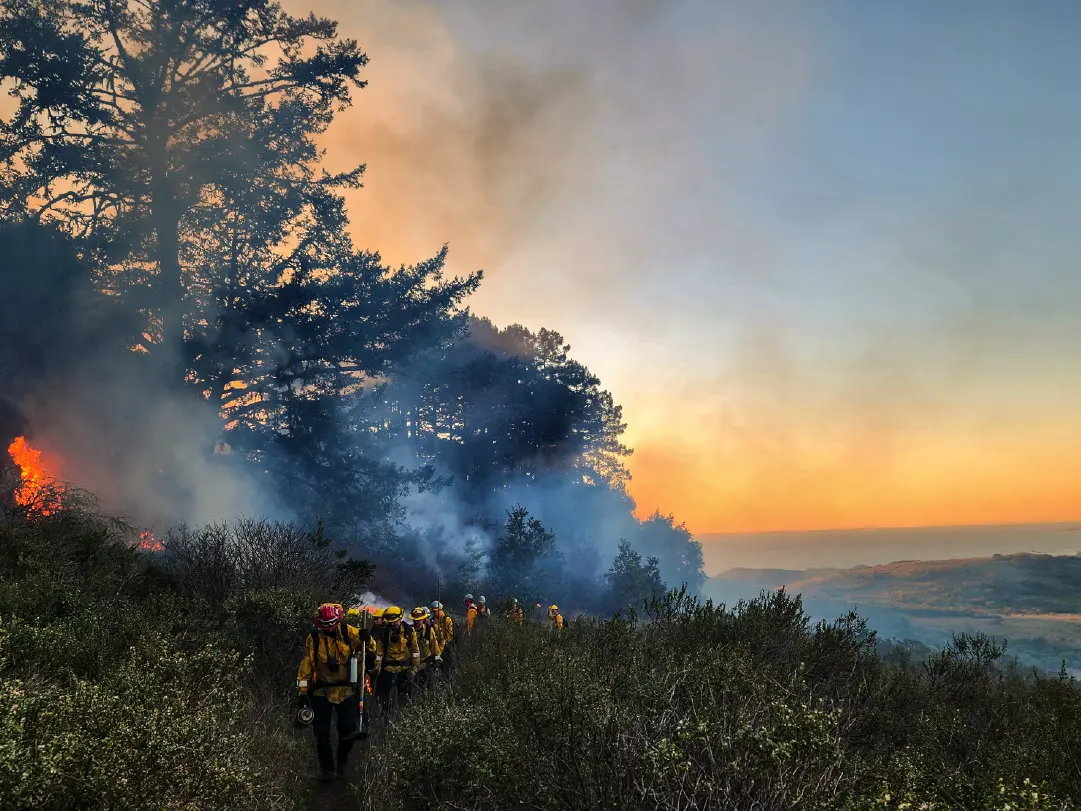
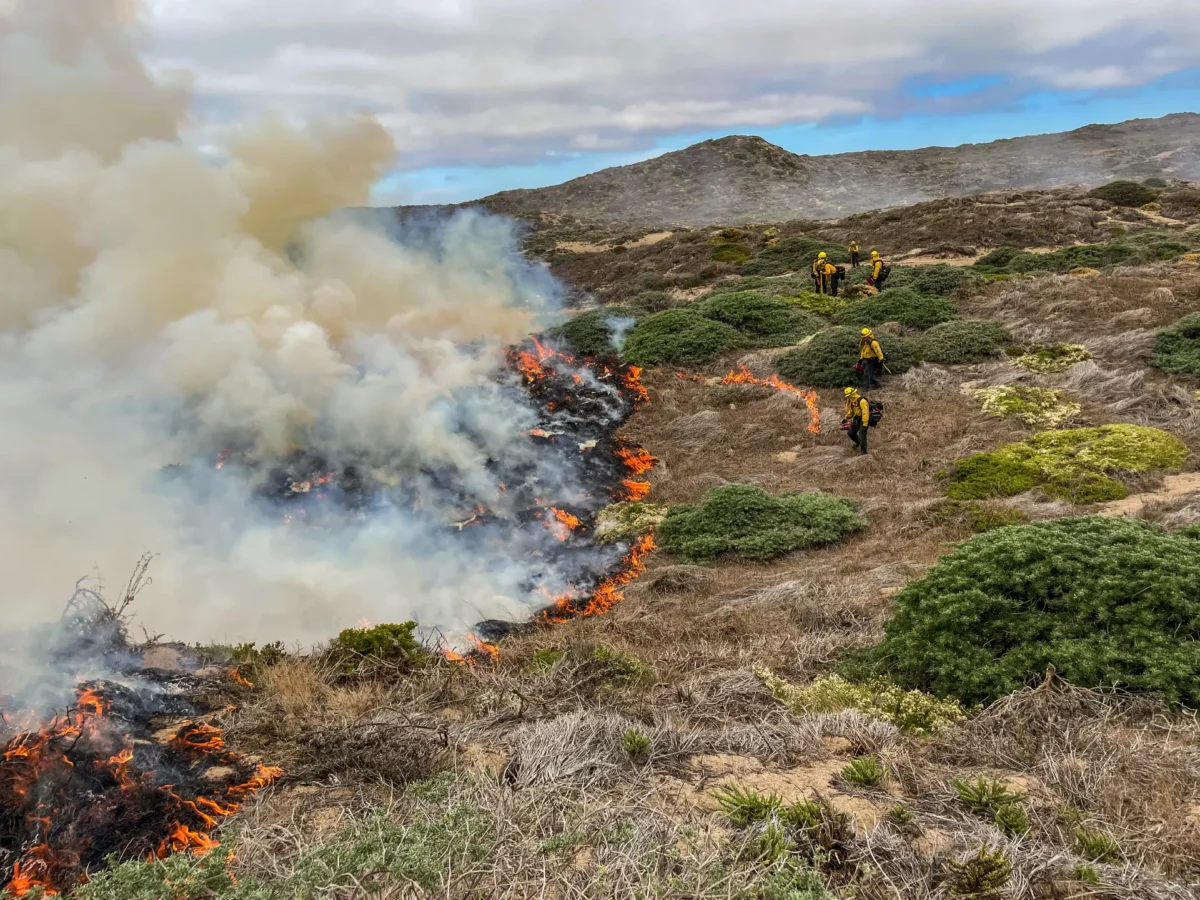
His team performs prescribed burns in California during the winter — outside of wildfire season. “Of course, anytime of year in California can be wildfire season because the different parts of the state have different climatic influences,” Klausch says. They burn to prevent wildfires, but also to remove invasive species — often doing one large burn that takes over a couple hundred acres and then a lot of small burns that target specific areas.
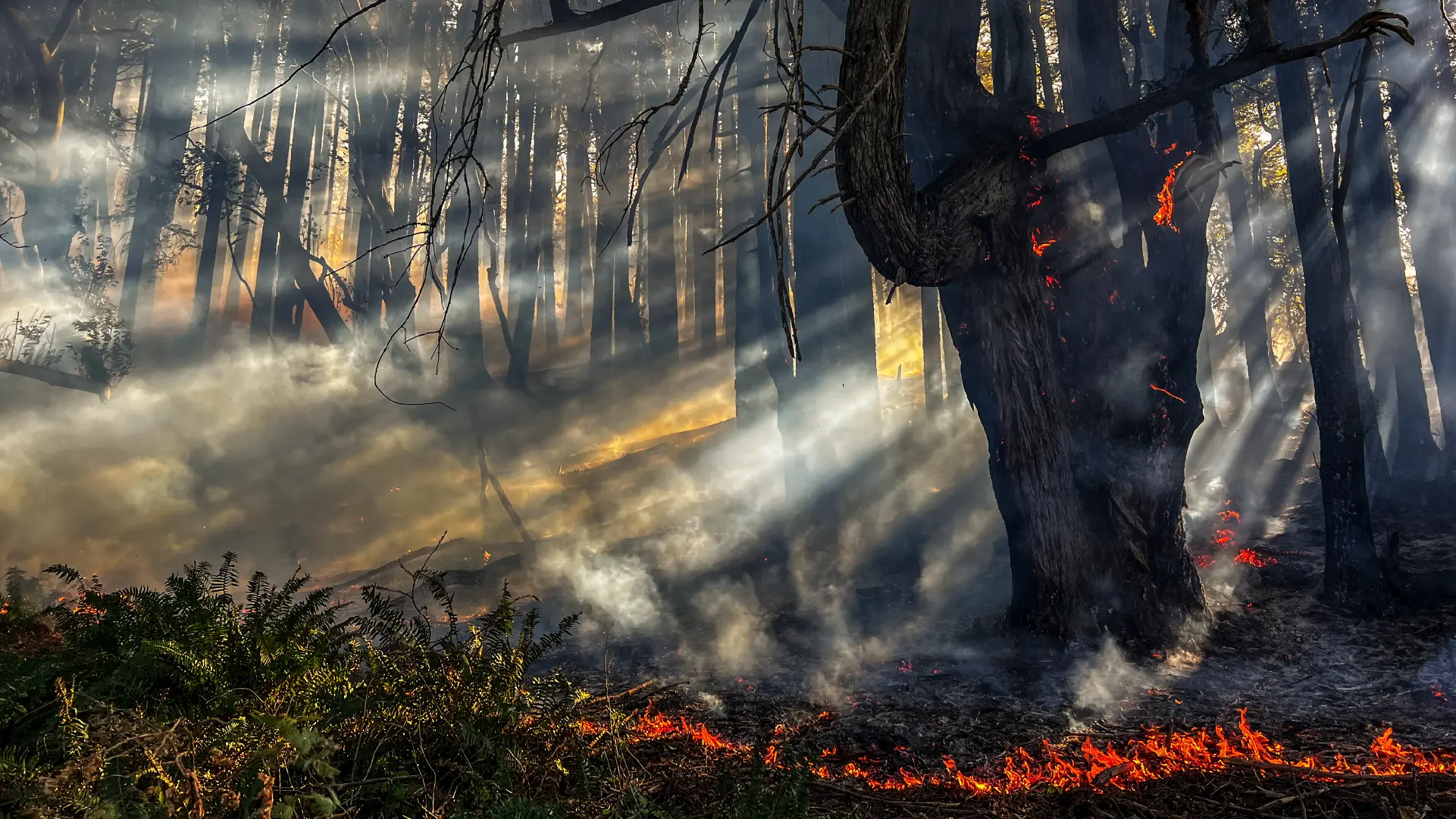
Burns often only take a couple days to complete depending on how dry it is. In a redwood forest, however, burns can last up to three weeks. The wood smolders and holds onto fire that can reignite and cause prescribed fires to escape containment and get out of control. Klausch and his team prevent this as much as possible with patrols, keeping a close eye on potential hotspots, and monitoring the weather and wind patterns.
Fuel for the Fire
Thinking back to his time in college, Klausch never could have imagined where he’d end up. But that’s the point of majoring in environmental studies. His education with the Nelson Institute is what set him up for success in the career that he has now. “Environmental studies helped me understand more of the humanistic side of wildlife ecology,” Klausch says, “because I’m managing natural resources both for people and around people. So, it helps to have that social perspective.”
And just like his prescribed burn association, the environmental studies major pulls in students from various backgrounds — something that Klausch appreciated about his student experience. “I remember I went to an event for the first class of environmental studies majors, and it was really cool to see all the different majors that other students were linked to,” Klausch says.
He advises current students to take opportunities and go wherever the wind takes them, because you never know where you’ll end up. You could catch angry turtles in the marshes of Wisconsin or ride fire-breathing ATVs in Florida or help conserve buried tribal sites in California like Klausch has done. “Yeah …” he admits, “it’s been kind of a wild ride.”

