

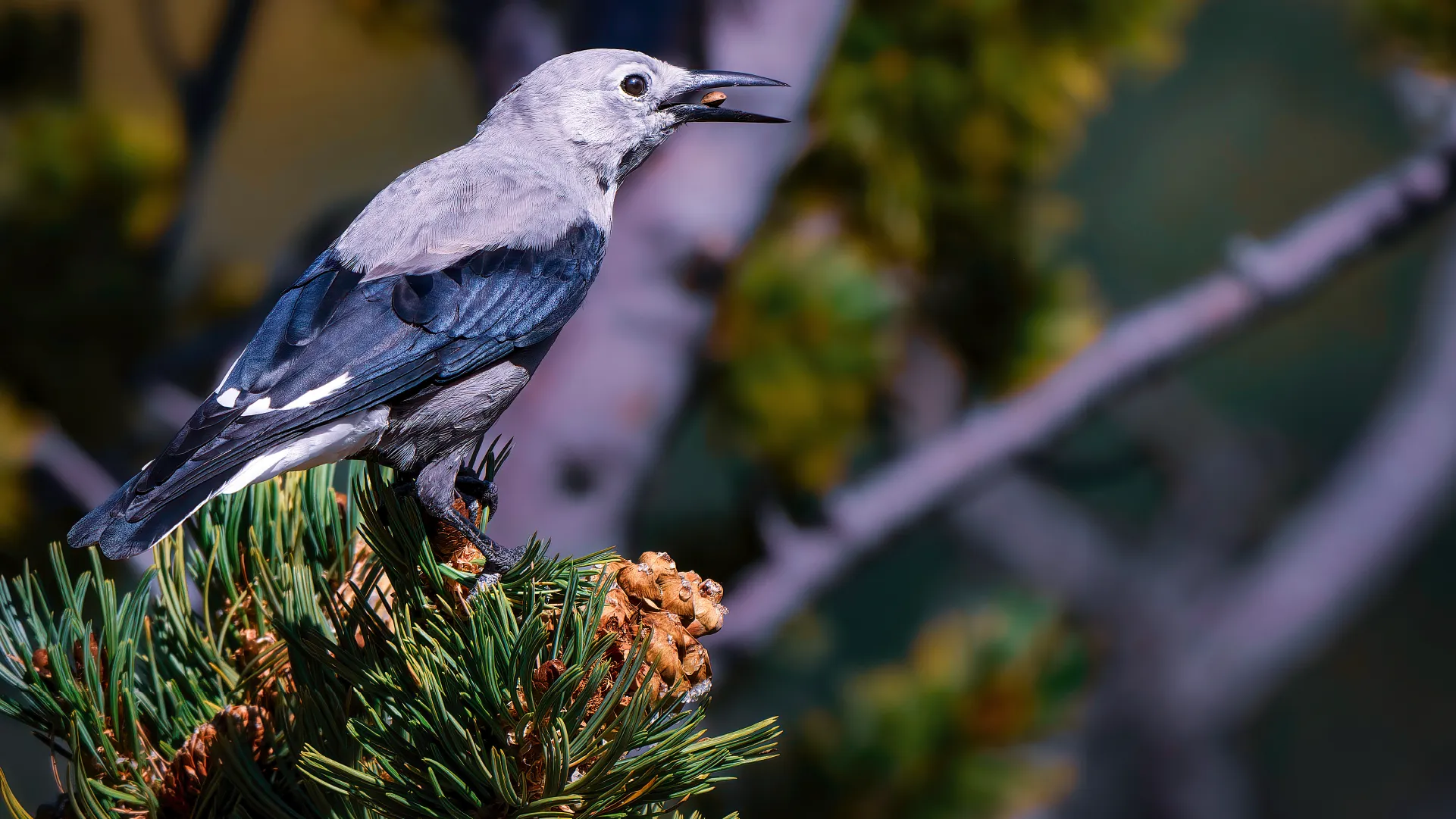

A new study exploring the behavior of Clark’s nutcracker, a grey and black bird native to the mountains of western North America, offers insight into how an important forest species may persist despite increasing wildfire activity. Led in part by M. Zachariah Peery, associate professor in the Nelson Institute’s Center for Ecology and the Environment and the College of Agricultural and Life Sciences, the research examines how the bird’s movement patterns help sustain forest resilience in California’s Sierra Nevada.
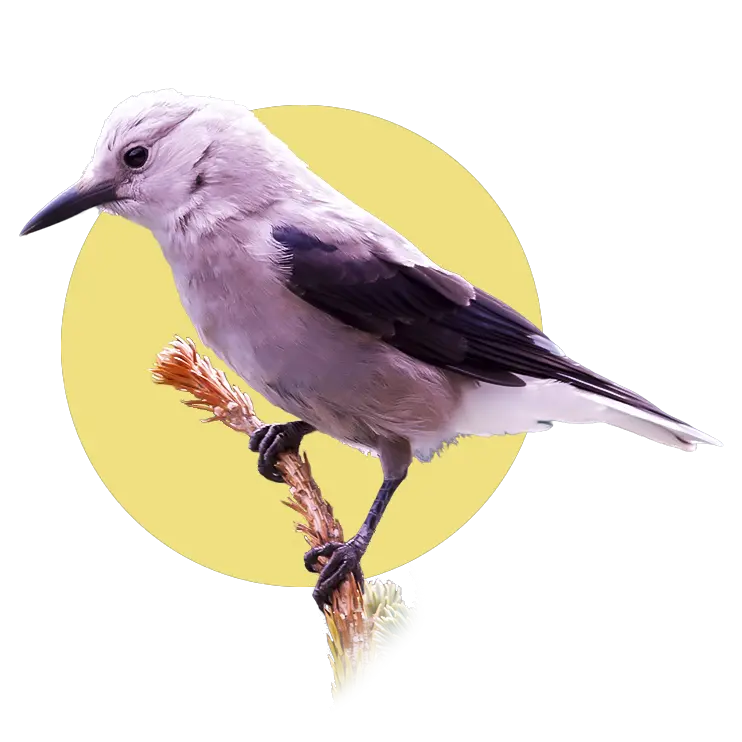
Clark’s nutcracker is considered a keystone seed disperser because it helps regenerate forests by caching and spreading pine seeds across large landscapes. Researchers used passive acoustic monitoring between 2021 and 2023 to study nutcracker occupancy across roughly 25,000 square kilometers of low- and mid-elevation conifer forests. The team evaluated how the birds responded to different pine species, wildfire severity, elevation, and topography.
The study found that nutcracker colonization was less likely in areas recently affected by high-severity wildfire, but the species’ nomadic behavior appeared to buffer populations from immediate declines. Occupancy rates even increased in 2022 despite destructive fire seasons the year before.
While Clark’s nutcrackers are often studied for their relationship with threatened whitebark pine forests, this research highlights their broader ecological importance in lower-elevation forests, where they play a vital role in supporting forest regeneration and long-term ecosystem resilience.

