

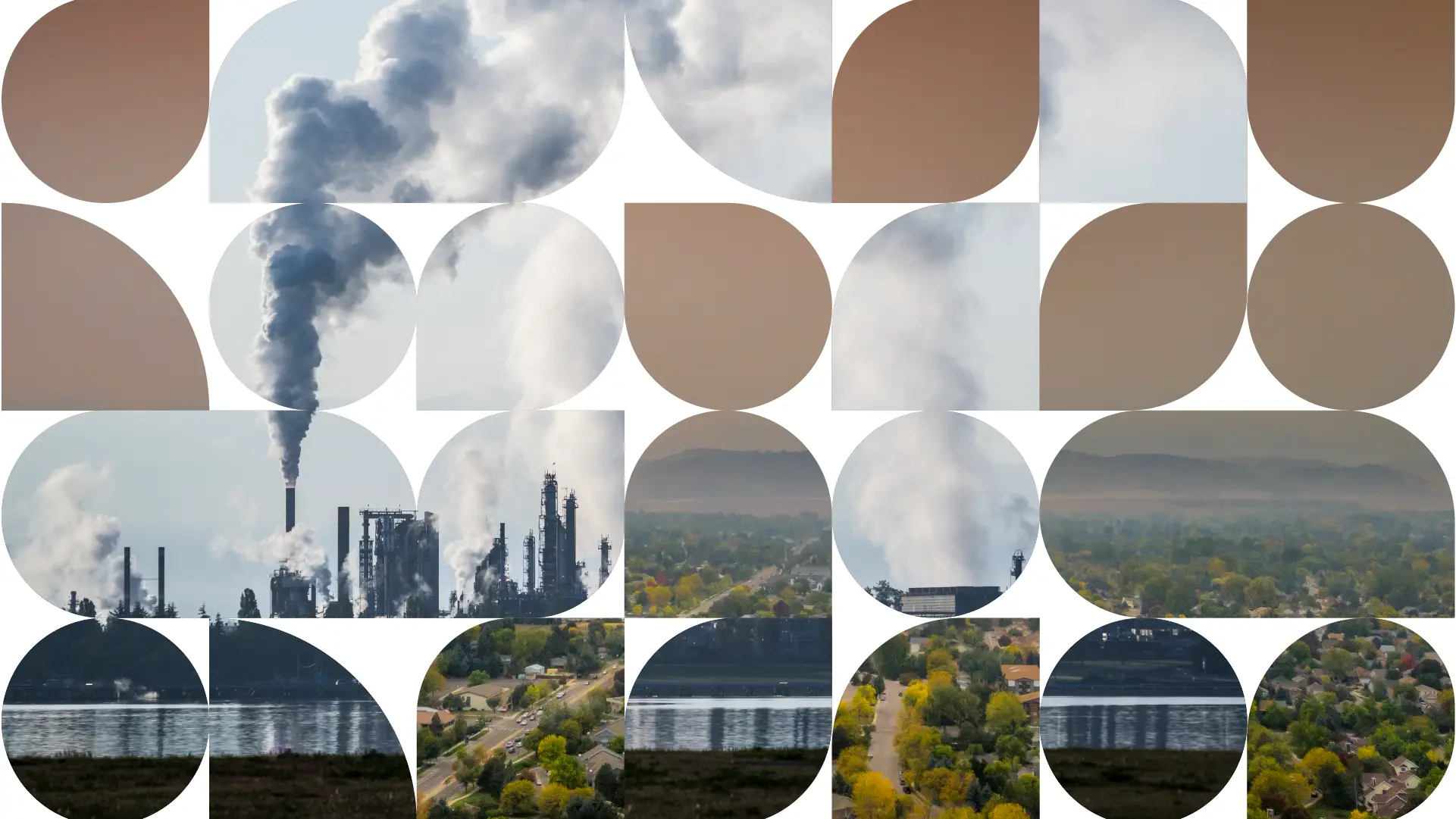

Did you remember to breathe today?
There is no choice in breathing, so it goes without saying that the quality of our air must be pure, healthy, and free to all. However, due to the nature of air, there is no controlling it on an individual level. We can’t choose to breathe in “good” air and go without the “bad” air. It’s all just air. And it’s a commodity that’s controlled through sweeping legislation, global alliances, and collective impact.
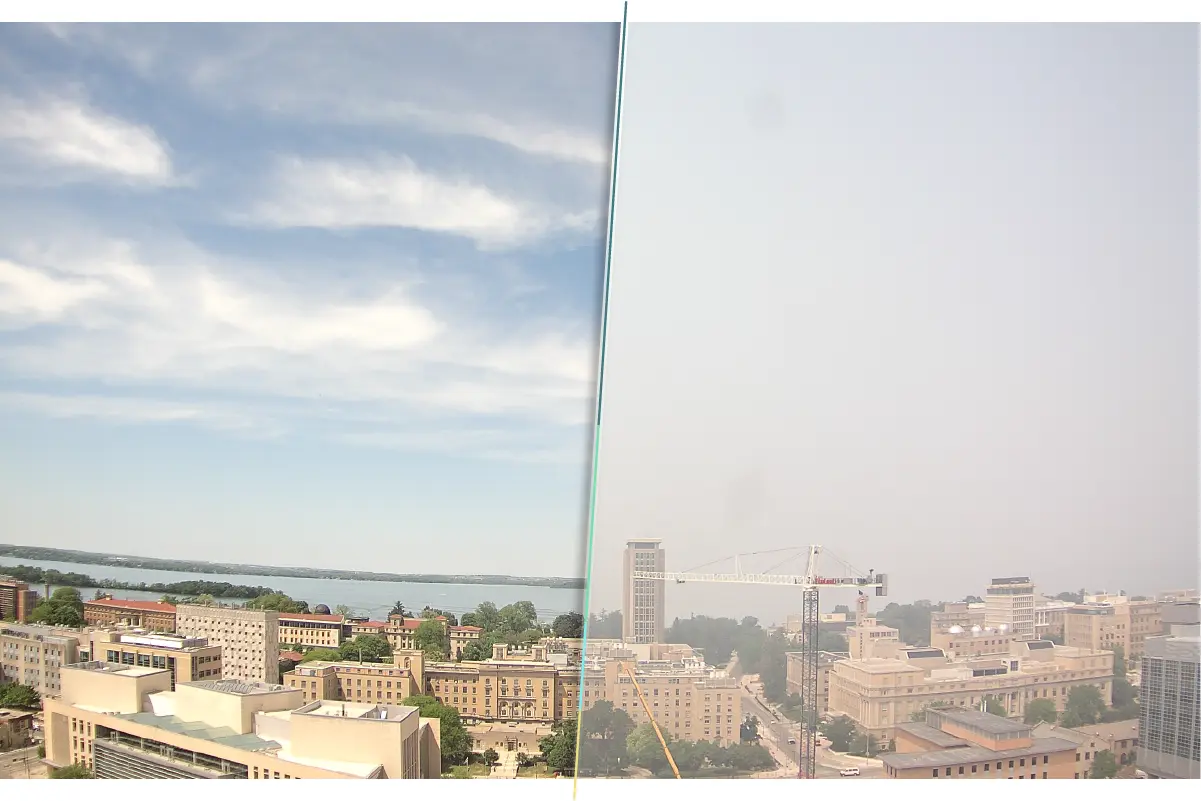
Think back to the past few years. How many days or weeks in a row did you receive an air quality alert on your phone? Did you take heed and limit your time outdoors during poor air quality events? Maybe you had to be outside so you wore a mask to mitigate some of the long-term health risks. Or maybe you didn’t care at all and threw caution to the wind. It’s just a little hazy out… so what?
In the United States of America, we are fortunate enough to benefit from the Clean Air Act for the past 55 years. “In many ways, air pollution in the United States is a good news story,” says Tracey Holloway, Nelson Institute professor and leader of the Holloway Group. “We have the rules in place, the sources are getting cleaner, and people are getting healthier.”
Since 1970, man-made air pollution — think car exhaust, factory emissions, construction dust — have all been effectively regulated to contain fewer harmful particulates. Under the Clean Air Act, there are two categories of air pollutants: criteria air pollutants and hazardous air pollutants.
Criteria air pollutants are common and widespread, but there’s only six of them: carbon monoxide (CO), lead (Pb), nitrogen dioxide (NO₂), ozone (O₃), particulate matter (PM10 and PM2.5), and sulfur dioxide (SO₂). The Environmental Protection Agency (EPA) sets National Ambient Air Quality Standards (NAAQS) for each pollutant based on evolving public health and environment data. These standards are then placed in the hands of each state to enforce.
Hazardous air pollutants are known or suspected to cause serious health effects like cancer or birth defects. Basically, “there is no threshold of exposure that’s considered safe,” says Holloway. The official list has over 180 pollutants, including benzene, asbestos, mercury, and formaldehyde. These pollutants are less common and required to be limited at the source using the best technology available.
So, why does it seem like we’re experiencing more and more poor air quality alerts each year? Is the Clean Air Act not working?
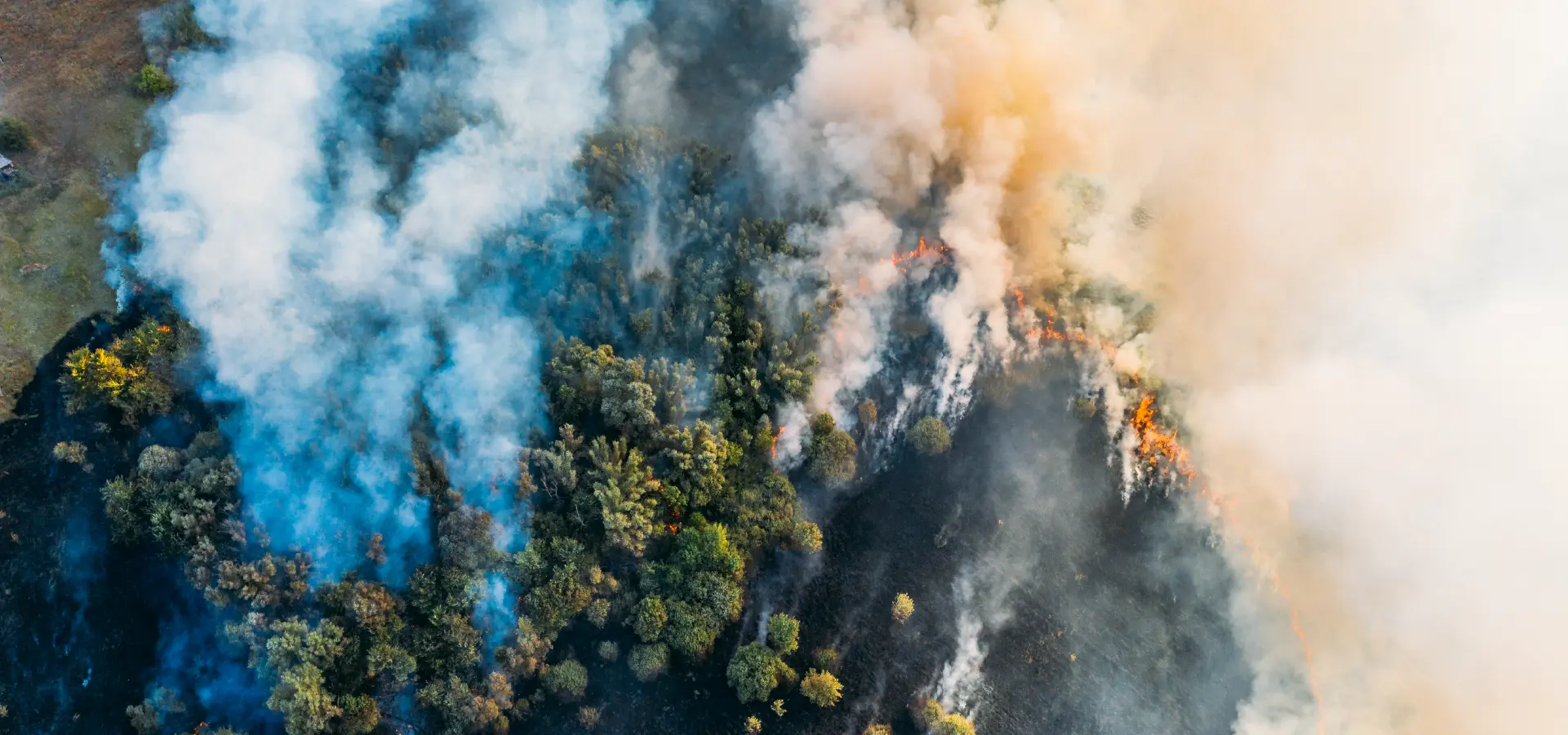
The answer (in part): wildfires. “Usually people talk about a problem when they can feel that it is a problem,” says Holloway. “Like wildfires.”
Climate change has led to a pattern of warmer temperatures, drier conditions, and more frequent droughts — especially in boreal and temperate conifer biomes. It’s one of the reasons behind what seems to be an increase in Canadian wildfires. And once all that smoke is in the air, it lands down in the northern United States, leading to weeks of unhealthy air quality alerts.

“If you look over the last 30 years, we’re seeing larger-scale air quality events — like Canadian wildfire smoke intruding into highly populated areas where it doesn’t typically reach, like New York City, Chicago, and the Midwest,” says Stuart Illson, research scientist and geospatial data engineer at the University of Washington (also an alum of the Nelson Institute’s environmental observation and informatics program). “We’re seeing these events unfold and trying to understand what risks they pose.”
You may be thinking: It’s just a bit of smoke? How bad can it be?
Wildfire smoke isn’t your typical campfire or wood stove smoke. “A fire in your wood stove burns relatively efficiently, combusting dried wood down to ash and releasing mostly carbon dioxide and water vapor,” explains Illson. “Forest fires don’t work that way. Trees are often left standing and charred rather than fully consumed. That incomplete combustion produces smoke with a far more complex and hazardous chemical makeup. It’s considerably worse when [the wildfires] burn through man-made structures, adding a whole suite of toxic compounds to the mix.”
So, what happens when you breathe in that smoke? Is it a death sentence?
No, not right away. People aren’t choking on the smoke in the air, but the health effects go much deeper the more you’re exposed. The particulate matter that you breathe in is finer than human hair, and once it’s in your lungs, it gets trapped in your bloodstream for days on end, leading to increased inflammation markers. Often, it just means an increased chance of a headache, runny nose, or scratchy throat. “You feel kind of cruddy,” says Illson.
However, that’s if you’re a relatively healthy person. People with preexisting cardiovascular and respiratory conditions are the most at risk. On the more serious side, these poor air quality events often lead to increased strokes, heart attacks, emergency room visits, and early cognitive decline. And that’s just what we know right now. The full picture is still being put together through long-term studies.
So, what can we do about it?
Forest management practices are adapting to meet the increased frequency of wildfires, but once a fire starts, it’s hard to get it to stop. Short of volunteering as a frontline firefighter, there’s not much you can do on an individual level to directly stop a burning forest. What we can do is protect ourselves from the harmful effects of poor air quality events by 1) limiting our time spent outdoors during unhealthy air quality periods and 2) wearing a proper-fitting, particulate-filtering mask if you have to be outside.
For Annelies Quinton, a current environmental observation and informatics (EOI) student and cross country athlete, air quality has affected her outdoor workouts across the country — from growing up in Portland, OR, to attending and running for Harvard University, to now earning her master’s in the Midwest. “It’s hard to not live in a place that’s impacted by wildfires and not being able to go outside,” says Quinton. “But there’s also that gray area of when can you and can you not?”
By making small concessions — like choosing to go on a run inside rather than outside or keeping a spare N95 mask handy — during poor air quality events, we can protect ourselves from the harmful pollutants in the air. Illson agrees, adding that reliable smoke forecasts could play a big role in shaping how people plan their lives. “Ensemble weather forecasts give you a probability — a percent chance of rain, a percent chance of severe conditions. We don’t yet have that same kind of reliable and communicable forecasting for air quality. If we could develop machine learning approaches to get there, that would be tremendously valuable in helping people plan their lives during smoke events.”
“Programs like the Interagency Wildland Fire Air Quality Response Program already work toward this goal, deploying expert Air Quality Resource Advisors (ARAs) who release smoke outlooks to help communities make informed decisions during fire events. But ARAs can’t be everywhere at once, and that’s precisely where better forecasting tools could make a difference,” Illson explains.
While putting artificial intelligence to work on forecasting air quality events seems like a good idea, there are some roadblocks that make it a little tricky. “You have a lot of hurdles applying machine learning to wildfire. Physical processes and other phenomena occur at a fine scale that you can’t observe or control, making it hard to predict,” says Illson. “Where the smoke ends up in the atmosphere is dependent on a host of factors that are really hard to quantify.”
Luckily, Illson, Holloway, Quinton, and many other air quality researchers are up for the challenge. In fact, Holloway’s PhD focused on using computer models to track how much one country contributed to a different country’s air quality back in the late 1990s. “We can measure chemicals that are in the air, but they don’t come with an import or export label. So, we have to use pretty advanced tools to trace back where air pollution came from and what its likely sources were,” says Holloway. Since then, Holloway has led quite an accomplished career — which includes serving as two-time leader of the NASA Health and Air Quality Applied Sciences Team (HAQAST).
Operating for over a decade, HAQAST (pronounced hay-kast) is the link between air quality science and policy. Holloway and other HAQAST members work together to translate NASA satellite data into actionable, science-backed policies that affect our health and air quality management solutions. “This idea that we can track chemicals from outer space seemed like science fiction back when I started in 2003. But now the instruments and analysis of methods have gotten better, and there’s this big opportunity to think about how we can connect space-based data with on-the-ground information needs,” says Holloway.
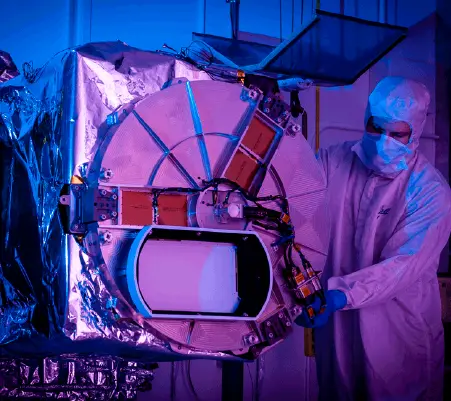
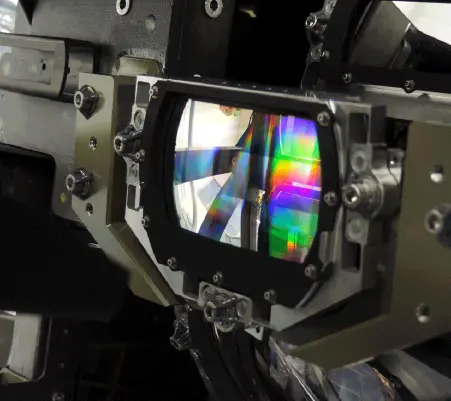
To effectively monitor air quality, Holloway uses satellites and ground-monitors to “see” what’s in the air. The way satellites detect what’s in the air is based on the wavelengths of radiation that are absorbed or reflected by particles and gasses in the air. There are some compounds that satellites can see really well, like NO2. But other compounds … well, not so much. For example, ozone at the surface is a huge problem for public health, but satellites can’t pick up on it due to a thick natural stratospheric ozone layer that makes it tough to discern the levels of ozone on the ground. Imagine you’re looking down at a pond — you could probably count the number of fish, but you probably couldn’t estimate their depth. It’s the same with satellites. They can’t estimate the depth of the fish — er, ozone.
That’s why it’s important to have a variety of tools available to detect and track changes in air quality. Right now, the United States is the best monitored country in the world, however, only a quarter of its counties have a single ground monitor. “It’s just not realistic to be capturing all that variability only with ground-based monitors. That would be incredibly expensive,” says Holloway. “So, to me, the role of satellite data is not to replace the ground-based monitors, but to provide a complementary data source.”
As technology continues to improve, so too must our policies and regulations. “When the Clean Air Act was written in 1970, nobody was thinking about satellite data,” says Holloway. “And what is considered a safe level has gotten stricter and stricter over time.”
The most recent example of this was in 2024 when the level of PM2.5 (one of the criteria air pollutants) was lowered from 12 micrograms per meter cubed to nine micrograms per meter cubed as an annual safe level. “This is very similar to a teacher setting a grading curve,” explains Holloway.
For Quinton, incorporating data into policy is exactly what drew her to the EOI program, and what she hopes to incorporate into her future career. “I really like how the program teaches us how technology can be used, as well as how to apply what we learn to the real world.”
Quinton has an exciting career ahead of her — no matter where she decides to take her interests. Just take it from Holloway, “I find working in air quality incredibly exciting because it combines weather, chemistry, policy, health, energy systems, land management, and international cooperation. You can look at every cool, interesting topic through the lens of air quality.”
What you’re breathing matters, and there are simple steps you can take to reduce your exposure to harmful particulates during poor air quality events. And while we can’t control every wildfire, we can regulate our own emissions. “It’s not a perfect story,” says Holloway, “but it’s a good news story when it comes to human-caused air pollution.”

