


Dear alumni and friends,
Welcome to a new school year at the Nelson Institute! It was, admittedly, a strange start to the school year as we welcomed students back to campus from our new home in the Computer Sciences Building as Science Hall begins its renovation journey. Though my office may be different, I’m deeply honored to say it now houses two authentic, preserved roaches (that the very team behind this magazine collected). As they say, you can take the Nelson Institute out of Science Hall, but they’ll never take the Science Hall cockroaches out of the Nelson Institute.
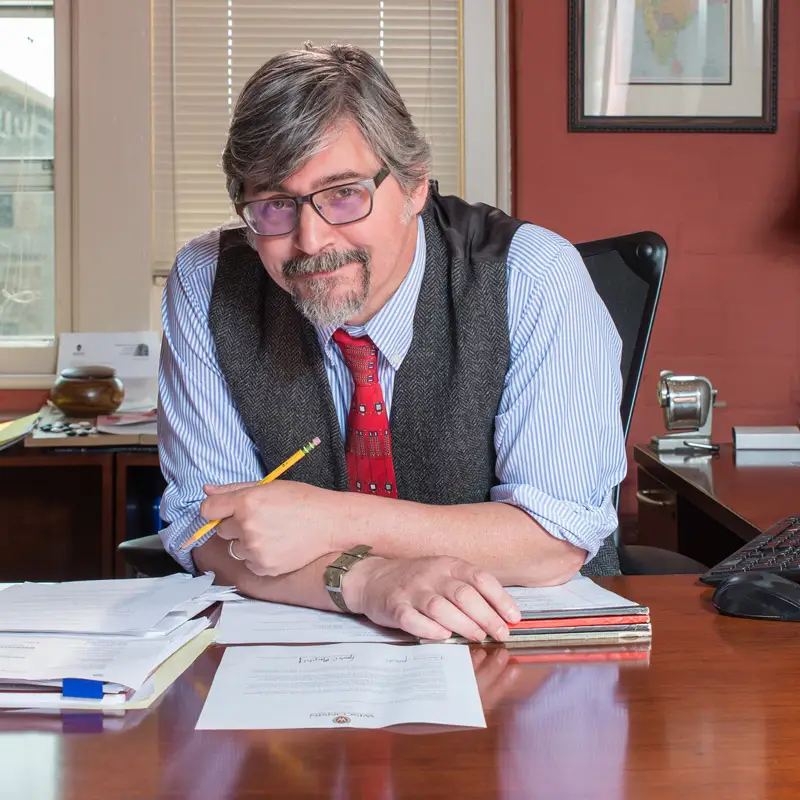
It is fitting that we bring some of our nonhuman relatives with me from our other digs, as they are, whatever else, a part of that building’s unique ecology, an artifact of the cycles and exchanges of life that are buzzing all around us. And while many ecologies are less prosaic and more filled with wonder (though roaches are a wonder in their way), all of it deserves our attention, research, and interest. And that’s what this issue of The Commons dives into: ecology. For the next set of thematic issues, we’ll be exploring the interdisciplinary focus areas of the Nelson Institute’s four research centers, starting with the Center for Ecology and the Environment (CEE). The youngest of Nelson’s four research centers, CEE was the brainchild of the entire campus ecology community and was birthed here out of years of excellent convening performed by its predecessor, “Wisconsin Ecology.” We’re proud to host campus ecology here. To learn more about what they do, be sure to visit them at their fall symposium on October 21 or 22.
The reach of Nelson’s ecological impact is astounding, and this issue reflects its terrific span. Our feature story alone covers ground from the remote rainforests of Brunei to the Baraboo Hills in our near-backyard. Read a poignant reflection from Professor Adrian Treves, who led groundbreaking and timely work — so relevant he was tapped to feed lines to the U.S. Senate floor during live debate — on the effectiveness of government-sponsored wolf-killing programs. Plus, get to know Holly Gibbs PhD’08, a faculty member whose research you’ve undoubtedly encountered but whose personal story is being told for the first time.
Holly is a graduate of our environment and resources (E&R, formerly land resources) program, which is celebrating its 50th anniversary this year. We’re celebrating with a number of events featuring remarkable program alumni — Dr. Gibbs included! The festivities culminate in our annual Rendezvous on the Terrace alumni gathering on Friday, Sept. 25. There, we’ll also honor our 2026 alumni award winners. If you’re able, I hope you’ll join us.
On, Wisconsin!
Paul Robbins
Dean, Nelson Institute