

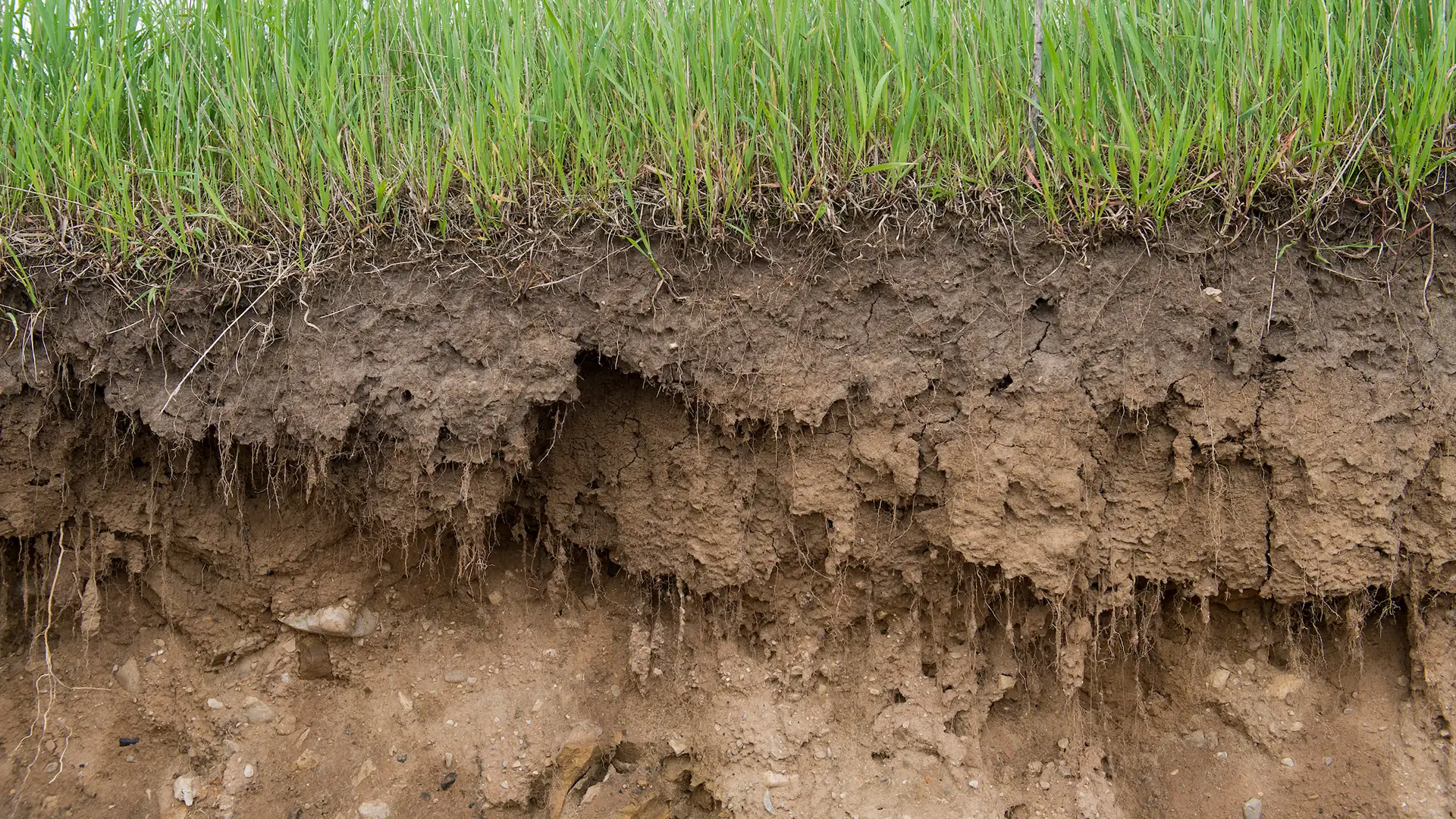

Where are you right now? What are you standing on? Whether you’re reading this from your backyard or a high-rise, the answer is the same for all of us. (Unless you’re reading this from a boat. That’s a story for another issue.) Somewhere, below your feet, is dirt. Or is it soil? Keep digging to find out; here are five things you didn’t know about dirt.
1
Is Dirt Soil?
The jury is out on if dirt and soil are interchangeable. Per Merriam-Webster, the first definition for both nouns pertains to a level of “goodness,” i.e. dirt = “a filthy substance” and soil = “moral detriment.” Their land-related definitions, however, are more related: “loose or packed soil: earth” for dirt and “firm land: earth” for soil. But you won’t find a Department of Dirt Studies on the UW campus, so here’s a soil scientist’s definition: “dirt is soil that is out of place.”
2
It’s aliiiiiiiive.
Actually, you probably knew that already. But did you know that soils are estimated to house nearly 60 percent of Earth’s species? Just a quarter tablespoon of soil can host more organisms than there are people on the planet.
3
Carbon Keeper
Soils are critical when it comes to carbon storage. They hold more carbon than the world’s plants, forests, and the atmosphere combined. So, how we manage soils directly affects how much carbon dioxide we release into the atmosphere. Methods like organic farming, cover crops, and more can increase soils’ carbon stores — while also boosting food production.
4
Backyard Pharmacy
Soil, and the organisms that call it home, are some of the best sources of natural remedies. Antibiotics, including penicillin, are naturally produced by soil organisms. In fact, scientists just discovered a new soil-based antibiotic that can help stop drug-resistant infections. (Please don’t take this as an endorsement to eat dirt, however.)
5
Slowly, Slowly, Slowly
Time moves slowly in soil land. The soil beneath your feet could be anywhere from one to more than 10,000 years old. Dig deeper, and radiocarbon dating suggests some soil is millions or billions of years old. As for the “fresh” stuff on top? It can take up to 1,000 years for one inch of topsoil to form.

These Experts Have all the Dirt on Dirt

Ankur Desai
Chair, Department of Atmospheric and Oceanic Sciences; assistant director, Center for Climatic Research

Zac Freedman
O.N. Allen Professor of Soil Microbiology; affiliate, Center for Ecology and the Environment

Michael Notaro
Director, Center for Climatic Research

Thea Whitman
Visiting associate professor, Department of Soil Science

