


There’s a photo that Olivia Sanderfoot loves. It’s her and her son, then hardly one year old, on a hike in Will Rogers State Historic Park in Los Angeles. A favorite birding spot of hers — and just a few miles from their apartment — Sanderfoot loved sharing the wild respite with her son.
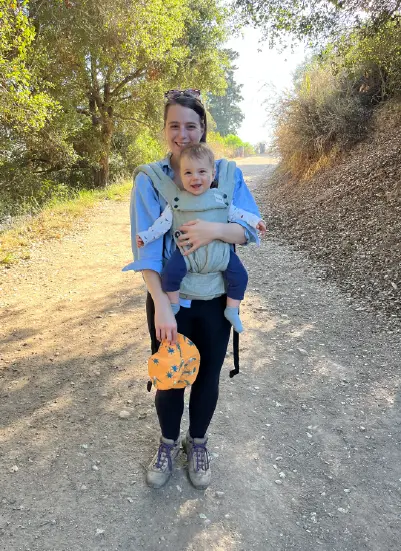
Will Rogers Park burned to the ground in the Palisades Fire of January 2025, which scorched nearly 40 square miles of Los Angeles County and caused more than 100,000 residents to evacuate. Sanderfoot, her son, and her husband were among them. But holding the photo now is bittersweet. “It’s a beautiful photo,” she says, “but it’s hard to look at if you know that everything in that photo is ash.”
That was the closest Sanderfoot has been to a wildfire — physically, at least. She spent her master’s coursework and postdoctoral studies investigating the impacts of wildfires, but not the effects most researchers focus on. Before Sanderfoot, shockingly little published research existed on how wildfire smoke — or air quality in general — affected birds. To Sanderfoot, too. Nevertheless, she’s starting to feel comfortable in the “leading expert” title she’s often given barely 10 years after finishing her master’s degree from the Nelson Institute for Environmental Studies. And she should: last summer, she was hired by the Cornell Lab of Ornithology — the world’s most prestigious avian research outfit — to lead its acclaimed citizen science program, Project FeederWatch.
Birding 101
This would typically be the paragraph that starts with: “Growing up, Sanderfoot always had a love of birds.” But she didn’t. It’s not that she actively disliked birds, she just wasn’t born with binoculars around her neck. She found birds as an undergrad at the University of Wisconsin–Madison when she was looking for an easy A. Studying biology and Spanish with a certificate in environmental studies, she still had some requirements left to fill in her final spring semester. She could check a bunch of them off with Forest and Wildlife Ecology 521: Birds of Southern Wisconsin, taught by Nelson Institute affiliate Anna Pidgeon. “It’s basically a class on birding and how to identify birds,” she remembers, so she enrolled. And thank goodness she did, because when life took a turn, birding became her safest space.
“My family was going through a lot,” she says, and the weight of trying to help and support a loved one whose mental health was struggling was heavy. “I tried meditation, I tried therapy, and those things did not really seem to ease that at all,” she reflects. “But birding did. I just remember going outside and feeling like I had this superpower that I didn’t have before.” From there, birding became a hobby and a passion.
Sanderfoot continued her graduate studies at UW–Madison, enrolling in the Nelson Institute’s environment and resources master’s program. With Tracey Holloway, professor of environmental studies, as her advisor, Sanderfoot had the opportunity to work with the NASA Health and Air Quality Applied Science Team, which is led by Holloway and based out of UW–Madison. “My job was to communicate the work that atmospheric scientists were doing to advance public health. How do we use satellite data to learn more about air pollution to protect public health?”
As she was concurrently homing in her thesis, she began to think: what if we could communicate how air pollution is impacting birds? “That could be a good starting point for talking about actions that we could all take to lower our carbon footprint, to reduce air pollution,” she thought. But there was one problem. “We actually didn’t know how air pollution impacted birds.”
You’ve probably heard the phrase canary in a coal mine — “that was a real thing, that people actually did bring canaries down to moderate levels of noxious gases,” Sanderfoot says. “We’ve known for a really long time that birds are inherently more sensitive to air pollution than other types of animals … It’s always surprised me that we just don’t know that much about it.” Her thesis became a literature review of all research done on the avian impacts of air pollution, which was published in Environmental Research Letters in 2017.
Birders, Assemble
When Sanderfoot left Madison, she knew everything that everybody else knew about how air quality affected birds. Now she wanted to answer her own questions. “I realized that in order to answer these questions, I really needed to get better at statistics. I needed to better understand how to analyze [and] interpret data,” she says. She headed west to the other UW — the University of Washington — to pursue her PhD with quantitative ecologist Beth Gardner. There, she narrowed air pollution to wildfire smoke. “In a time of increasing fire on the landscape, we’re seeing more wildfire smoke, and we’re seeing wildfire smoke impact places where it really hasn’t been historically,” she says. “We’ve been just starting to think about what that means for people. If it means something for people, it probably means something for birds too.”
Unlike humans, bird lungs are rigid. Instead of expanding and contracting with each breath, air is moved through a system of air sacs surrounding the lungs. Because of this, they extract twice as much oxygen as we do. “They’re basically constantly absorbing oxygen, which also means they’re getting a nasty dose of whatever else is in the air too,” Sanderfoot explains.
But when it comes to wildfire smoke, the effects go beyond health. “Smoke also darkens the sky. It changes the smells. It is very much an all-sensory experience to be in a wildfire smoke event,” she says. “Birds are dynamic beings that use a lot of different cues in their environment that tell them when and how to engage in various behaviors,” like hunting, foraging, calling, and even migrating.
As she continued her research, she found that her pointed interest in wildfire smoke added a unique challenge. “It’s almost impossible to design a classic traditional field study,” she explains. Even with the best weather forecasting, the odds of perfectly planning a three-week trip to the exact right location to monitor how birds respond before, during, and after a smoke event are slim. So Sanderfoot got creative. She turned to another thing that birders know something about: community. “I started thinking more about participatory science: public participation in research. I think that is one of the most powerful tools that an ecologist has in her toolkit,” Sanderfoot says.”
While nearing the end of her PhD work in Seattle, COVID-19 shut down the world. Sanderfoot wondered how the change in human presence affected bird habits and movements. She led a project that engaged nearly 1,000 people in cities across the Pacific Northwest to watch birds out their windows for 10 minutes, once a week. The results were covered widely from scientific journals to mainstream news outlets.
Sanderfoot had found her niche: a blend of the scientific method, community-sourced data, air quality science, and birding. “I don’t know that it would’ve occurred to me that I could have this career and be at this intersection without the Nelson Institute,” Sanderfoot reflects. “The education that I received was so unique in that regard. It was so broad, so interdisciplinary, and so focused on experiential learning and thinking outside the box that it allowed me to really create this.”
Sanderfoot followed that current through her PhD defense to postdoctoral scholarships and fellowships at the University of California–Los Angeles. There she created another participatory science project, Project Phoenix, specifically focused on birds and wildfire smoke. Birders across California, Oregon, and Washington log birds in their neighborhood for 10 minutes per week, then Sanderfoot and her team build a dataset to analyze patterns and trends.
Protect the Nest
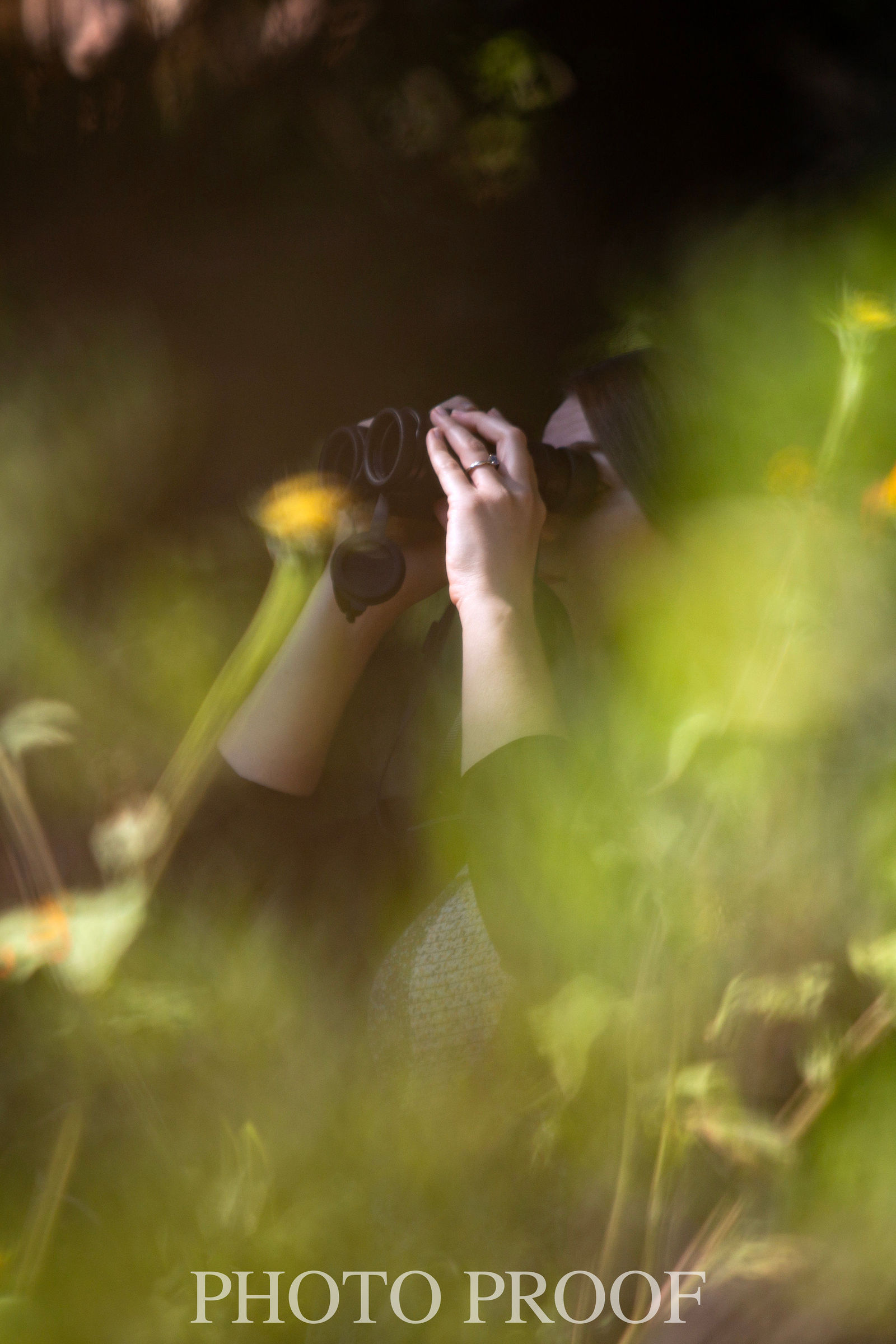
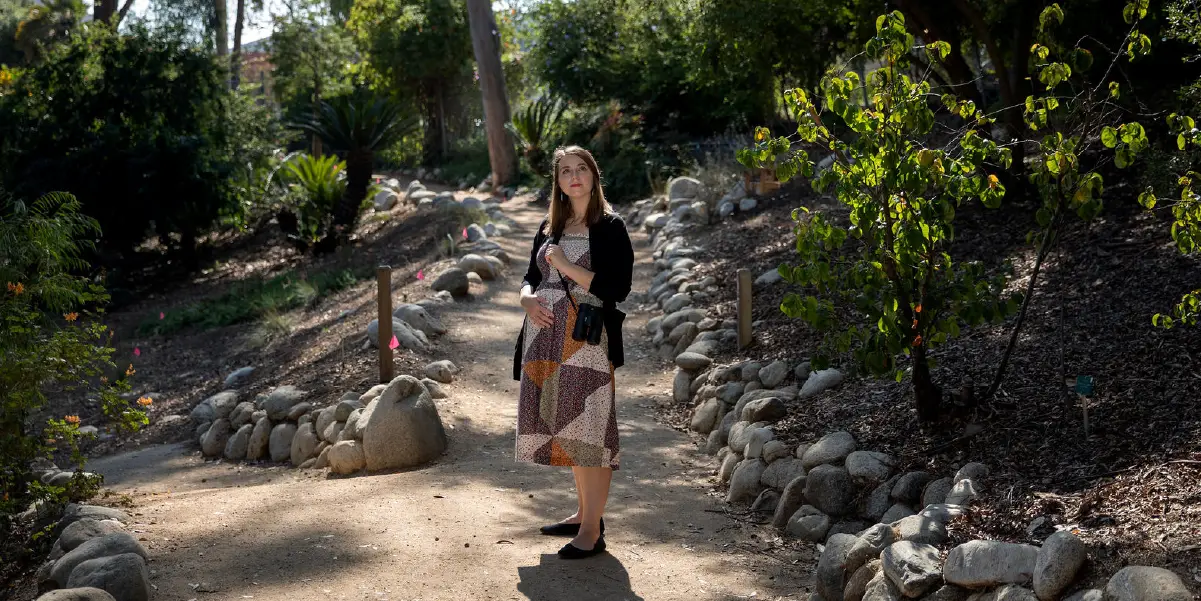
Sanderfoot and Project Phoenix were featured in Audubon Magazine in 2023 — coincidentally a devastating and record-breaking year for wildfire smoke in the United States. That summer was particularly brutal, and it was the summer that Sanderfoot found out she was expecting her first child. She remembers the photoshoot she had for her Audubon feature. “I think I’m four or five months pregnant in those photos,” Sanderfoot remembers. One photo shows her looking to the sky, one hand on her binoculars and one hand on her growing belly.
As any mom can tell you, becoming a parent has changed the game. “When I think about the birds that I love, I wonder if my son will get to have these same experiences observing them in the wild,” she reflects. It can be especially hard, Sanderfoot says, when her work is steeped in existential questions of how and why our ecosystems are changing — and what that means for both birds and our experiences with the natural world. “There are lots and lots of people my age who feel hopeless and demoralized and overwhelmed, and those are valid emotions,” she says. She felt that way, too, once, before she found solace in birds. But now she has a bigger reason. “My kid needs breakfast, and he needs to get to school, and he needs to have a good day because he deserves to have a good day because these problems are not problems he created.”
Although the science can feel scary — the science is scary — there are aspects of Sanderfoot’s work that helps her stay positive. “I tend to, on most days, feel more optimistic than pessimistic about the future, not because of the science, but because of the people,” she says. “Being part of a participatory science program allows me to connect one-on-one with bird enthusiasts all over North America, all of whom care a great deal about this and are doing what they can to take bird-friendly action to avoid the catastrophes that I fear.”
Citizen Science, Scaled
Sanderfoot is now part of the largest bird-enthusiast participatory science program in the world, having joined the Cornell Lab of Ornithology in August 2025. Based in Ithaca, New York, the Cornell Lab manages eBird, an online repository for tracking and data visualization with more than 1.2 million users; Merlin Bird ID app, which you probably have on your phone already, along with 10 million other people; and Project FeederWatch, the world’s longest running participatory science program which Sanderfoot now leads.
“When I got the job, I was like, ‘Oh my God, I’ve made it!’” Sanderfoot remembers. She was beyond intimidated when Kevin McGowan, a big name in the bird world, popped into her office to say hi. But he’d heard that her son loves owls, so he showed up with a handful of owl-themed gifts. “Everybody is very nice and chill, and there’s not that air of prestige in the building,” she says. “It is a big deal to be at Cornell Lab … but it also does carry a lot of responsibility. I want to make sure that I’m representing the science as best as I can.”
Project FeederWatch has been collecting data on birds in North America for four decades. Participants do weekly, two-day tallies from November to April, logging the highest number of each species they see. The team offers webinars, an app, printables, and a host of other materials to make participation as low-barrier as possible. It must be working: there are about 30,000 participants, some of whom have participated for 25 years straight. “We have, therefore, an immensely powerful dataset of repeated counts in the same place at the same time of year, year after year after year,” Sanderfoot says. “That is a quantitative ecologist’s dream!” FeederWatch also runs optional surveys to gather information on bird-friendly backyard actions, engages with K-12 educators and more.
And that’s only about 50 percent of her job. The other half is staying true to the science she’s built her career on. She’s currently working with an interdisciplinary team of scientists at Cornell to investigate how wildfire smoke may affect migratory patterns. “The repercussions of that could be enormous. If things happen at that scale that cause that much derailment, birds are going to end up in places they’re not supposed to be. There’s a lot to dig into here,” she explains.
Comfort in Migration
Sanderfoot hasn’t quite reached the one-year mark at the Cornell Lab, but her plate — er, feeder? — is certainly full. “I’ve probably added too much to my plate, but I wouldn’t have it any other way,” she says. And she’s still working on settling into the East Coast life, from a new commute to a new preschool to an entirely new soundscape. “If you’re somebody who’s really connected to nature … being put in a different place can be very exciting, but it can also be very jarring,” she says. “It’s kind of like this ache or sadness,” she explains, to hear birds and recognize them, but not be able to immediately name them.
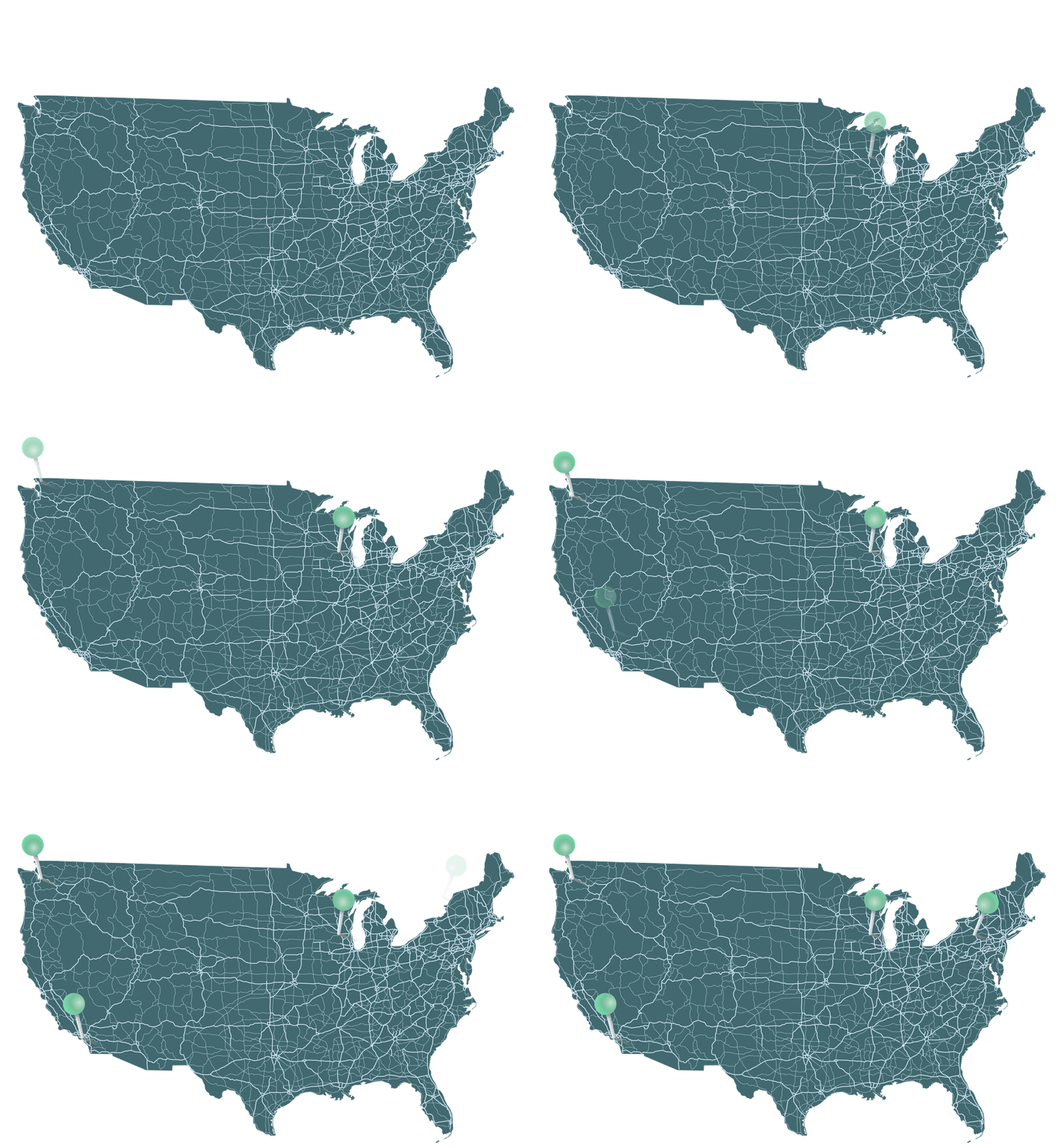
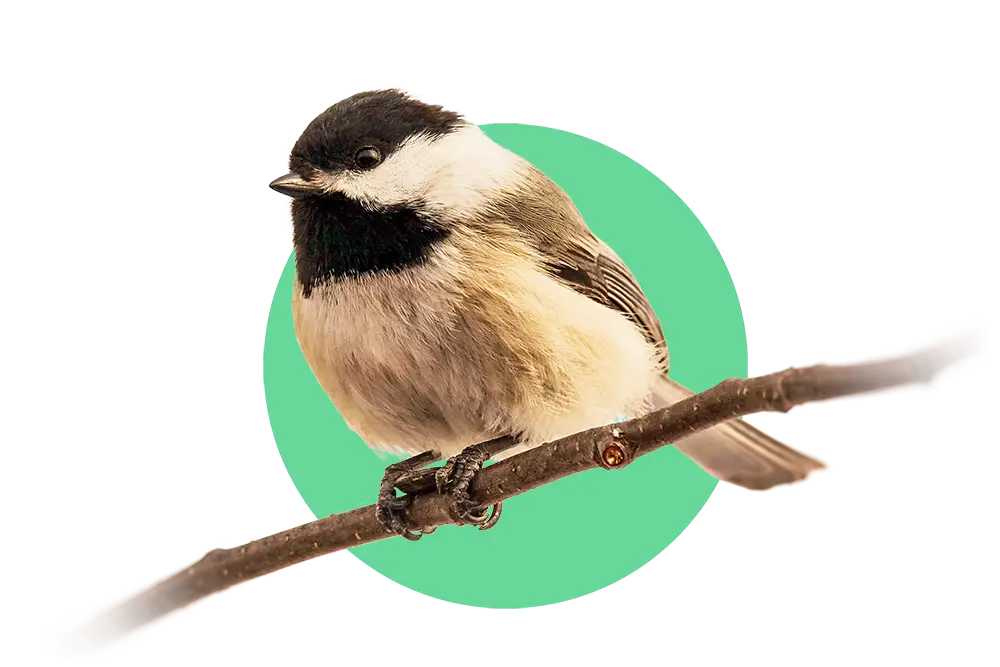
Though the birds out her window have changed, there’s a thread that connects her own migration map: the joy that birds bring. “Whether I’m picking up on black-capped chickadees on my birdwalk in Madison or observing pigeon guillemots out on the Salish Sea or hearing yellow-rumped warblers on my street in LA or here watching the Northern Cardinals at my window, those experiences bring me peace and joy,” she says.
“Oh, look! A black-capped chickadee!” she sees out her window, noticing that the feeder is crooked again — almost certainly from the squirrels. “I need to go fix that.”

