



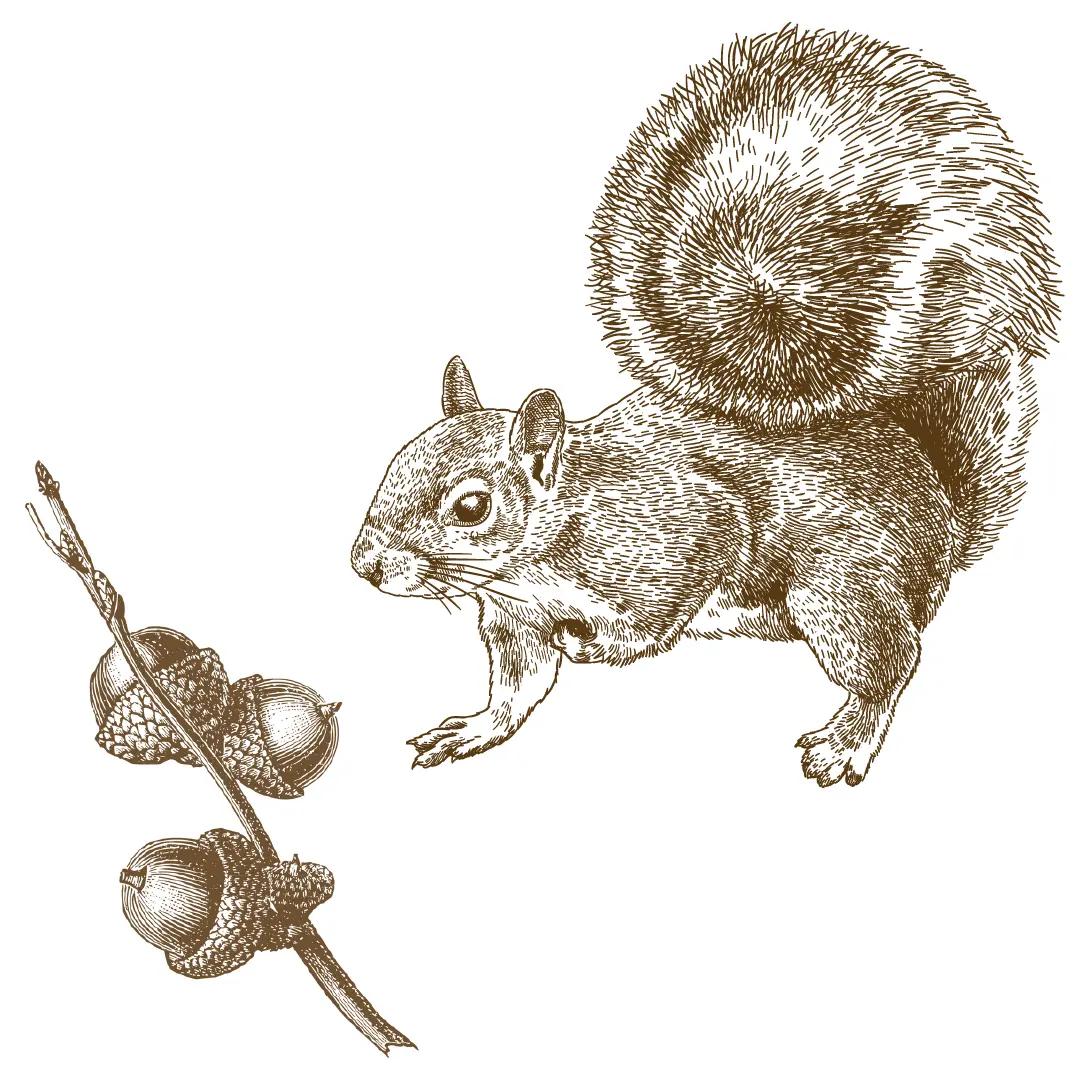
A new study coauthored by Center for Ecology and the Environment affiliate John Orrock found that using capsaicin, a pepper-based deterrent, could help oak acorns survive long enough to germinate in forests where rodents quickly consume seeds. First published earlier this year, these findings will aid environmental management as oak-dominated forests have recently experienced significant declines.
To test the spicy seed theory, researchers placed treated and untreated acorns in both shrub-invaded and shrub-cleared plots and monitored how often they were removed, eaten, or dispersed. They found that the spicy coating gave acorns a better chance of surviving, though it couldn’t fully counter the increased seed predation that comes with dense invasive shrubs. Additionally, capsaicin didn’t change how far animals moved the acorns, and its protective coating gradually faded in the field, suggesting that while helpful, it’s not a complete solution on its own.
Orrock is a professor in the College of Letters & Sciences at the University of Wisconsin–Madison and principal investigator at the Orrock Lab. His work centers on how behavior and ecological interactions shape patterns in nature. He studies how information, space, and time influence ecological and evolutionary processes, often focusing on terrestrial plants and mammals.

